Thursday, 24 May 2012

Happy Memories from Gothenburg

I’ve just spent a few hours rather tediously filling out forms associated with moving back from Sweden to the UK. Amazingly it is now nine months since I returned and whilst I am loving being back in London, I do get the odd yearning for the best bits of Sweden: such as rye bread; sizzlingly clear air; the rugged coastline; 5 minute walks to work; boatloads of fish; and a life less hectic.

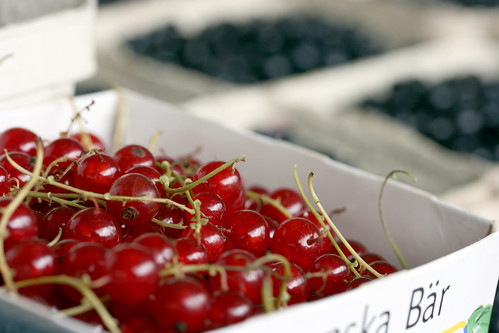
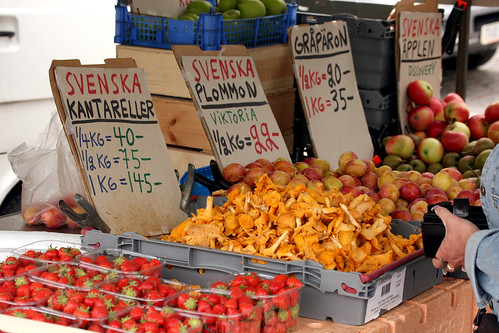
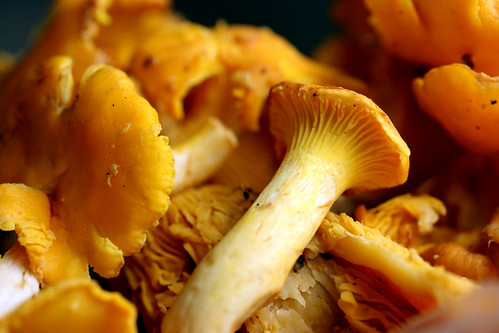
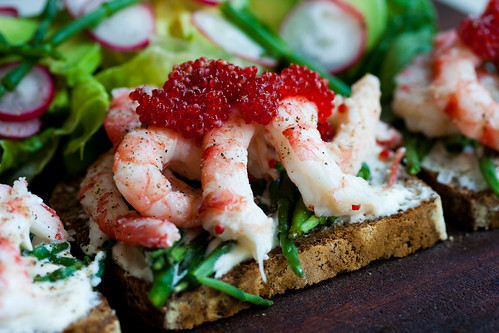
I found myself looking back through my old Gothenburg 365 blog and thought I’d share some of my favourite pictures from it with you. Forgive my indulgence.

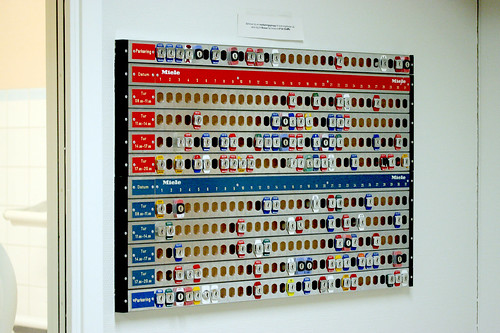
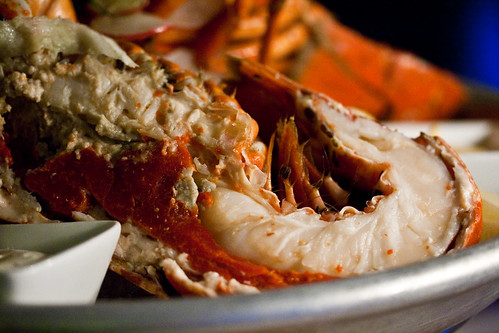
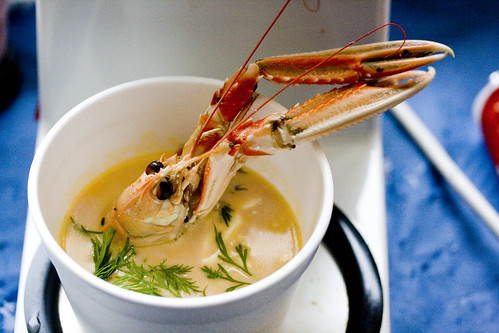
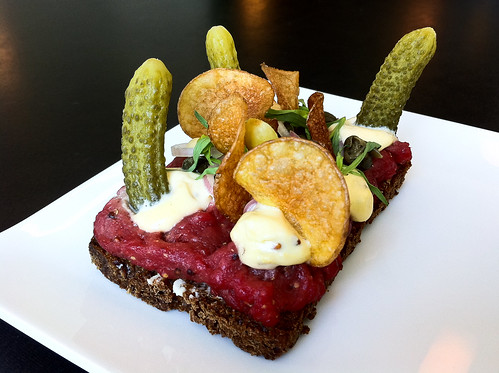
Gothenburg 365 Jan Mid-13Fart hinder 1. Washing machine rota Trolley on ice with tram Life Ring Gothenburg 365 Jan Mid-12 Ice Cracks Girl with balloons Beetroot Gnocchi1 Scrabble Red stone graffiti Water fight Boating Lobster Safari-32 Thin yellow and blue flag Buzz the boat Foxgloves November Gothenburg-8 Jesper 2 Mussel Safari41 Salt & Sill-4 Salt & Sill-12 Venison tartar on rye Redcurrants close Kantareller market Chanterelles close Cranes orange Rainy clocktower Droplets Swedish Shrimp Sandwich-10 Fjallbacka-36 Fjallbacka-15 Gothenburg 365 November-9 Rally Sweden-4 Rally Sweden-60 Ryan Air Gothenburg 365 Feb-2 Gothenburg 365 Feb-1

Tuesday, 3 April 2012

Liver with Brunost Cauliflower Cheese

Brunost Liver and Cauliflower

Brunost (AKA Gjetost or Gudbrandsdalsost) is an amazing substance. It’s a Norwegian cheese that is typically made by mixing goat’s whey with goat’s cream and reducing it down until you get a dense, fudgy, sweet and savoury caremlised cheese that’s really hard to pin down. All Norwegians have a block or tube of it in their fridge which they eat on crackers and other snacks. It was considered healthy because of the high iron content, but it has since been downgraded to a health risk because of the high fat content.

It packs more calories than any other cheese, leaving even the mighty Parmesan in its wake. It’s like a cheesy Daim bar that has a powerful tang.

I first encountered it in Gothenburg when the 6 foot blond Swedish girl with an Irish accent on the cheese counter in the local market gave me a nibble of it and explained that people often lob a bit into the pan juices when they cook a steak or game to make a rich gravy. I gave it a pass at the time, but half a year later had a sudden hankering to try it out.

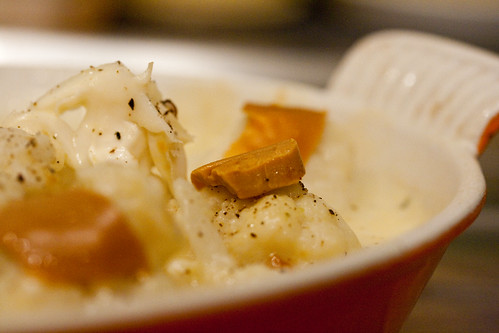
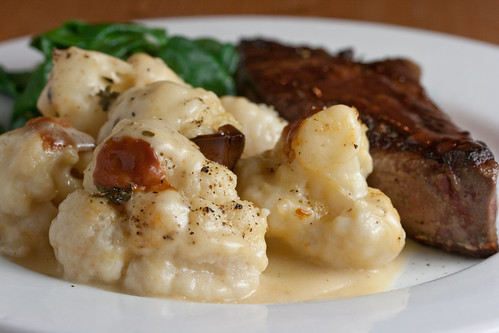
I asked a few Scandi friends who pointed me in the direction of a few recipes that suggest mixing a small amount with meat juices when cooking steak, elk, moose or venison. I figured that a nice piece of calf’s liver would be just as good and decided to accompany it with a rich Norwegian take on cauliflower cheese that was spiked with fudgy brunost.

Brunost Cauliflower Cheese

Ingredients:

1 head of cauliflower
1 knob of butter
1 tablespoon of flour
100g of gruyere
30g of brunost
150ml of stock or white wine
150ml of milk
Salt and pepper

Method:

Basically, make cauliflower cheese as you normally would by blanching some cauliflower and then smothering in a cheesy, béchamel based sauce, topped with grated brunost.

I like to mix the milk half and half with stock and find that gruyere is an ideal cheese. But what makes this special is the addition of brunost which gives the cauliflower cheese a sweet and sour kick that works brilliantly with the liver.

Brunost Liver and Cauliflower

Simply grate the brunost over the cauliflower cheese and add a few lumps as well as you see fit. Season with salt and pepper and then throw it in the oven for 20 minutes until golden brown.

Then season the liver with salt and pepper, dust with flour and then sear in a very hot pan for a few minutes until the outside is browned and the inside is still pink. Allow to rest somewhere warm and in the meantime deglaze the pan with a spash of red wine. Then whisk in a knob of brunost and reduce until you have a thick, fudgy gravy. Taste as you go and adjust the seasoning.

Brunost Liver and Cauliflower

Serve the liver adorned with brunost sauce and flanked by cauliflower cheese and spinach. For wine pairings for brunost dishes, check out Snooth, but you might be better with beer.

Thursday, 29 March 2012

Hake a la Washing Machine

Washing Machine Hake-10

When our washing machine broke down, Cowie was spinning with rage, whilst I grinned to myself and said a quiet prayer to the Gods of domestic appliances, that it might be in a cookable state. I figured that if we had to buy a replacement, my lifelong ambition to cook in a washing machine would be within my grasp.

The engineer’s report indicated that the machine was in a fully functioning state, except that the drum just wouldn’t spin, so he advised us to get a replacement. I figured that this is the dream situation. I checked the internet to see if anyone had done anything like this before and discovered some Americans had, quite brilliantly, attempted to cook scrambled eggs inside whoopee cushions, with highly questionable results. I’ll leave you to ponder what talcum powder-cum-rubbery scrambled eggs would taste like.

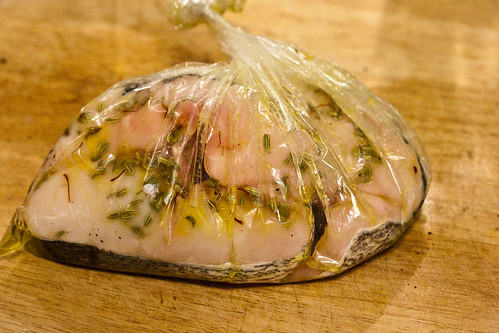
When we’ve cooked in lateral ways in the past, we’ve found a sure-fire technique is to improvise a sous vide bag by using a Baco bag and simply throw in a fillet of fish along with some flavours before doing up the bag with an aggressive knot. This approach was a great success when we cooked a fillet of salmon with soy, ginger, chilli and garlic in the dishwasher and the bath.

I popped into Moxon’s on my way home and had one of the most surreal experiences I’ve had in a long time. As I was perusing the selection of fish looking for some hake, one of the fishmongers inquired what I was looking for. Rather absentmindedly, I explained that I was looking for the ideal fish to cook in the washing machine. Silence descended before the boss intervened and asked his colleague to see if they had any hake behind the counter. Luckily they did and I was sent on my way with the fishmongers wondering whether they should call the asylum.

I figured that hake steaks would work well because the bones would support the structure and help them to cook evenly. Also, hake’s firm flesh lends itself to this long and slow cooking method. Rather than the Asian approach, used in the bath and dishwasher, I thought a combination of fennel and saffron would make for an exotic change.

Washing Machine Hake-2

Washing Machine Hake-5

When it came to the big night we popped the fish in a Baco bag along with some fennel seeds, salt, pepper, a dash of olive oil and a few strands of saffron and then set the washing machine on a 90’C cycle.

The machine gushed with water and then started to fill up, with the little parcel gently bobbing in the hot water bath. We sat and watched as the drum thankfully refused to spin and the fish gently cooked. It's an odd sensation having your food locked away without being able to prod or check it.

Washing Machine Hake-6

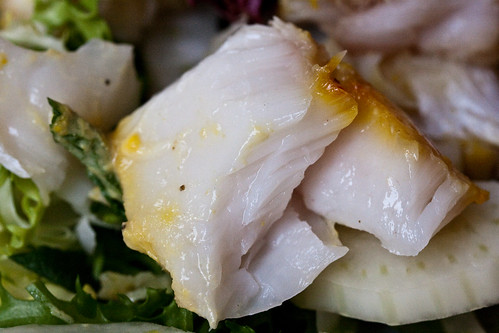
An hour or so later, the door clicked and we were left with perfectly cooked fish, that delicately flaked with a pearly gloss that held together like an MI5 officer under enemy questioning. The only down side was that because I’d put two fillets in the same bag, one of the steaks had slightly distorted into a strange shape. So if you are doing this, use separate bags.

I made a quick dressing by heating the juices that collected in the bag with a touch of cream and a squeeze of lemon and then made a salad with mint and fennel. The salad showed off the pearly white flesh and saffron hued surface whilst the fennel and mint added some crunch and freshness.

Washing Machine Hake-11

Washing Machine Hake-13

I couldn’t believe how well this crazy little project turned out. I was worried that the fish would be overcooked or uncooked. I was really concerned it would just taste of washing powder. And I wasn’t sure if the drum would kick in and start spinning at random. But none of these things happened and it not only worked perfectly, but it cooked the hake better than I have ever managed using conventional methods!

So when you hear the death rattle from your washing machine, embrace it and send it off to white goods heaven with a decent final meal.

Thursday, 9 February 2012

Marmalade Fetish from Blue Stockings Preserves

The Colours of Autumn

Photo from Slayer Photo via Creative Commons on Flickr

Living abroad makes you truly appreciate what you most value about your home culture. When I was living in Sweden I missed the comfort of eating pies and slow cooked meat dishes in cosy countryside pubs. I hankered after scotch eggs with gooey middles. I craved the ritual of reading the Observer with a pot of coffee. I gasped for a proper cup of PG Tips despite the tea in Sweden being really good. I occasionally had a Baked Beans Moment and even found myself celebrating my birthday with baked beans on toast at work for breakfast. And I also missed marmalade. Big time.

Although the word ‘marmalade’ pops up in lots of cultures, I’ve had far too many conversations with people overseas about marmalade which reveals that the stuff we know and love is dramatically different from what they think is marmalade. People seem to think it can contain any old oranges, rather than Seville. They are surprised when it has bits in it. Some even question whether non citrus fruit qualify. The truth is that what we call ‘marmalade’ in the Britain is peculiar to our culture and ‘marmalade’ in other countries has a looser frame of reference.

I can imagine an argument between Frege and Wittgenstein about what the word ‘marmalade’ refers to and some sort of baffling conclusion about the sticky problems of philosophy being caused by the incapacity of our bitty language to cope with such simple things as what we all mean by marmalade.

Putting this ridiculous issue to one side, Cowie and I decided to make three batches of marmalade. One classic fine marmalade. One batch with ginger and honey. And the last one with cardamom and honey, inspired by feedetgastro.

We used the same base recipe from Waitrose Magazine which called for overnight steeping, fine cut peel and a pair of Cowie’s stockings. OK. I made that last bit up.

We giggled to ourselves as Cowie filled her stockings with orange segments and invented our own jam company called “Blue Stockings Preserves” which impishly injects a bit of sex appeal into such a WI orientated world.

We’re planning to launch “Seedy Strawberry”, “Raunchy Raspberry”, “Burlesque Blueberry” and “Fondlesome Fig” jams as well. The lids of the jars will be covered in blue stockings and tied down with an Agent Provacateur-esque ribbon. And the labels will be illustrated with beautifully smutty imagery that would probably be banned in Sainsbury’s and loved by Rihana. Imagine Innocent’s brand world, but corrupted by Lady Gaga into making fetishistic jam.

Ingredients for 6 normal sized jars

4 Seville oranges
2 kg of sugar
3 liters of water

Method:

Remove the peel from the oranges and cut the remaining fruit into segments. Cover the fruit pieces in 1.5 litres of water and leave to soak overnight.
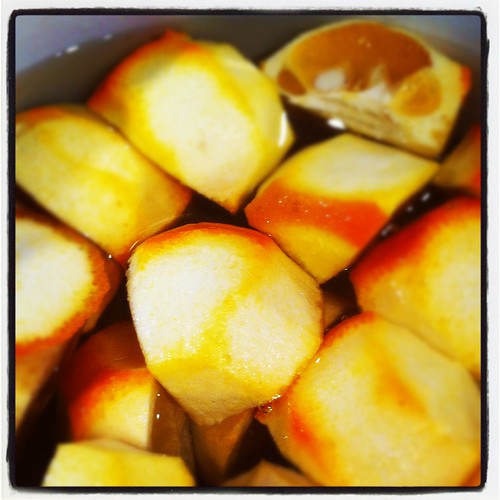
Seville Segments

Cut away any white pith from the peel and slice the zest into fine slithers. Add the excess white to the segments and cover the shredded zest in a further 1.5 litres of water.
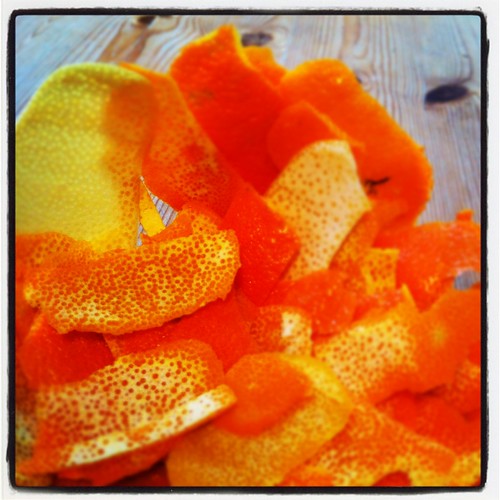
Marmalade Peel

The next day pour the zesty water into a large pan along with the water from the fruit segments and heat to a simmer. Feed the fruit segments into a stocking (not fishnet) and tie it at the top to stop the fruit escaping. Submerge in the pan and simmer for 2 hours.

During this time, heat your jars and lids through in the oven to sterilise them.

After 2 hours remove the stocking from the marmalade allow to cool. Once it is cool enough to handle squeeze out what juice you can and add it to the pan.

Pour the sugar into the pan and heat to a rolling boil. Allow to boil for 30-40 minutes until the liquid has taken on a golden glow. At this point do the saucer in the freezer test and prepare for bottling.

Pour the smoldering liquid into a measuring jug and decant into the super hot jars. Then leave to cool and once set seal with their lids.

Cut up an old shirt and secure to the lid with a rubber band. Or better still some blue stockings and a makeshift garter!
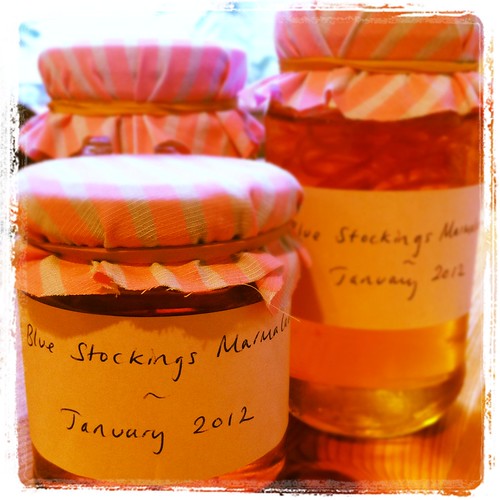
Blue Stockings Preserves Marmalade

Ginger and Honey Marmalade:

As per the above classic recipe, but exchange 200g of sugar for 200g of honey. And add a jar of preserved ginger to the pan when you add the sugar.

Cardamom and Honey Marmalade:

As per the classic recipe but add a dozen crushed cardamom pods to the orange segments when they go inside the stocking. And exchange 200g of sugar for honey.

The honey has proved to be a great success. It seems to have helped give the marmalade a really gooey set which has a comforting oozing sensation on the tongue. And of all three the ginger and honey edition seems to be going down the quickest. The fine shred is quite a different experience from course cut marmalade - with a much lighter but still intense flavour. There's a time and a place for both, but for now Blue Stockings Preserves cutting it fine.

P.S. Sorry for the iPhone photos. Superheated syrup and nice cameras don't seem to like each other very much!


LinkWithin

Blog Widget by LinkWithin