Showing posts with label slow cooker. Show all posts

Monday, 3 November 2014

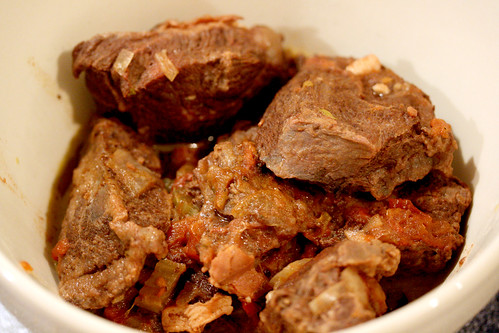
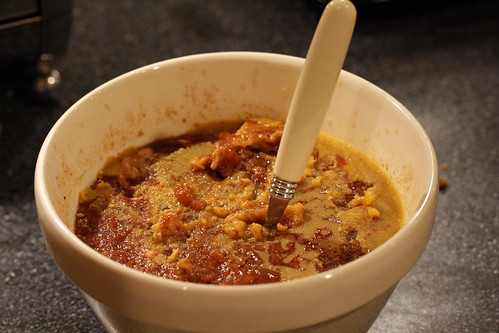
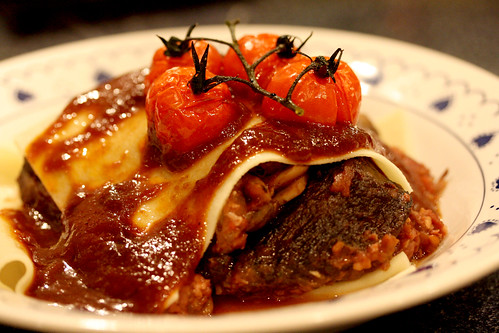
Sherry Addled Spanish Pigs' Cheeks

Pigs cheeks in their sticky sherry sauce again for night 2 of our foray into restauranting @themoveablefeastpopup

Pork and sherry is a fine combination. Especially when the sherry is sweet and the pork falls apart like a sous vide ponzi scheme. The sweetness of the pork is exaggerated and at once tempered by the oleaginous lusciousness of the sherry. And even more so as it reduces with onions and a touch of paprika. It would be lazy to say it tastes of Spain. But maybe Spain tastes of it. It becomes syrupy and, whilst sweet, also savoury and deep. A bit like a grandfather telling a long story full of unnecessary details and the occasional sentimental Catherine wheel of warmth.

So when Cowie and I were planning our main course for our pop up we found that pigs cheeks cooked in sherry was at the top of our list. It needed to be something that could be cooked in advance and reheated. Something where the prep was done way in advance and the flavours could mature. Something luxurious and generous, but not flashy.

In order to feed 60 we ordered 200 pigs’ cheeks from Kimber’s near Wincaton. Their first class farm shop is responsible for us acquiring a chest freezer for our house in London. Whenever we go down to Somerset we always seem to come away with unusual cuts of fabulous meat. We can’t recommend them enough and pretty much live off their pork rissoles have a serious soft spot for their goose skirt and Jacob’s Ladder.

We decided to slow cook the pigs’ cheeks in a mixture of medium dry sherry and Pedro Ximinex sherry along with a large quantity of caremelised onions which had been given a warm bath in sherry as well. Aside from some seasoning and a touch of paprika and garlic all they needed was a good searing and then a long burble in the sherry.

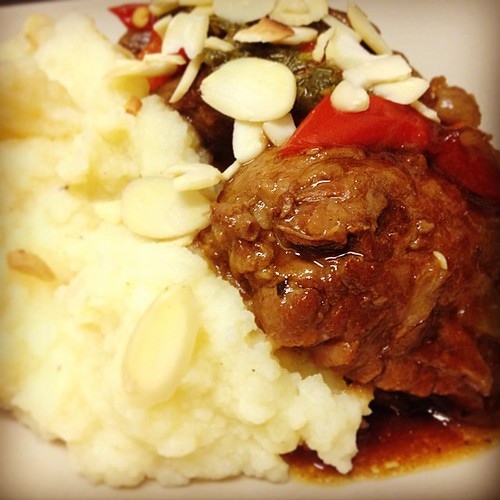
Served on their own, they would be in danger of being a bit too deep, so a gremolata made with lemon zest, lemon juice, olive oil and parsley brings them to life. And some toasted almonds bring out the nutty notes of the pork and savory nature of the sherry. They also add a nice bit of crunch.

The secret is to strain off the sherry liquor once the cheeks are cooked and to reduce it to a sticky sauce, brightened up with sherry vinegar as you see fit. Taste it regularly as you reduce it so you balance the acidity and the sweetness. It really is a killer sauce and if you have too much you can use it as a fabulous sauce with game. We had it with some grouse recently and loved it. Likewise it would grace a bavette or a haunch of venison. Guard it. And admire the way it sets to a wobbly dark brown jelly. It’s not looker.

Celeriac mash and some greens is all you need to go with this. Enjoy it. It’s our favourite dish.

Ingredients to feed 4

12 pigs cheeks with the membrane removed (Allow 3 cheeks per person. You just want the nugget of meat that butchers sometimes call the pillow)
Flour to dust cheeks
10 onions
4 cloves of chopped garlic (smoked would be extra nice)
1 bottle of medium dry sherry
200ml of Pedro Ximinez sherry
(Prunes, dried figs and dates are all nice optional extras)
Sherry vinegar to taste
1 celeriac
1 teaspoon smoked paprika
200g potatoes
100g toasted almonds
Courgettes
Salt and pepper

Method

Season the flour and dust the cheeks.

Sear the cheeks in a hot pan with a good slug of olive oil. Do this in batches. And if they catch loosen them with some of the medium dry sherry. Add this to the slow cooker.

Then fry the onions slowly until they caramelise. At this point add the garlic and smoked paprika. Add PX sherry towards the end of the frying. Add this to the slow cooker.

Pour over as much sherry as is needed to cover the pigs cheeks. Add 2 bay leaves. Grind in some pepper.

Leave to slow cook for 3 to 4 hours – or until the cheeks are cooked. You want them to retain their shape and not go mushy.

At this stage, make some celeriac and potato mash, steam some courgettes or greens.

Also, make a gremolata. Zest 2 lemons. Finely chop 100g parsley. Squeeze two lemons into a bowl with the first two ingredients. Add salt. Add pepper. Glug in some olive oil. Stir. Taste. You want it to taste as sharp and clean as a Japanese knife. It should have almost metallic cleanliness to it that sets off the dark, unctuousness of the pork and sherry.

When the cheeks are cooked strain off the liquor. Add it to a large saucepan and reduce aggressively. Stir. And taste frequently. Add a good splash of sherry vinegar to add some acidity and life to the sauce. This stops it getting too heavy.

You will need to reduce for some time. The stickier the sauce is the better. When it is nice and syrupy take it off the heat and put it in a jug.

Serve with the mash, and veg with 3 cheeks covered in sherry sauce. Then slurp over a spoonful of vibrant gremolata and scatter over some toasted almonds.
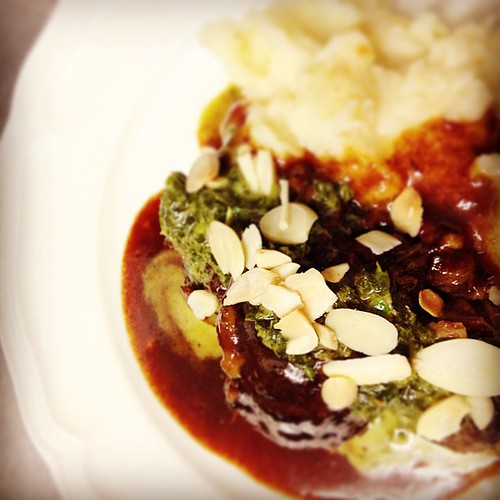
Pigs cheeks in a sticky PX sherry sauce with gremolata, toasted almonds and celeriac mash @themoveablefeastpopup

Monday, 18 June 2012

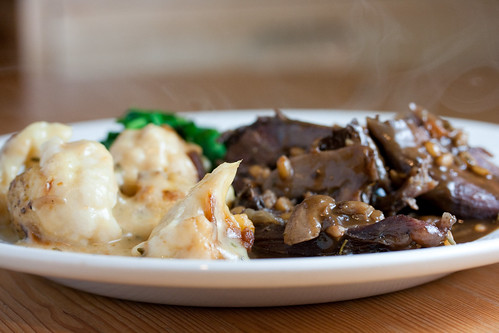
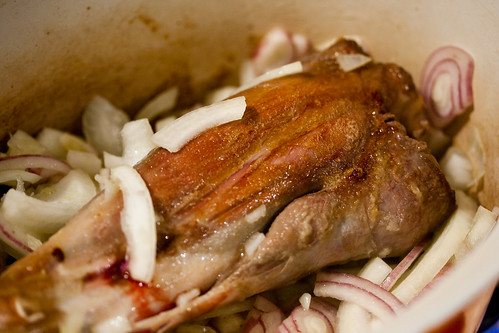
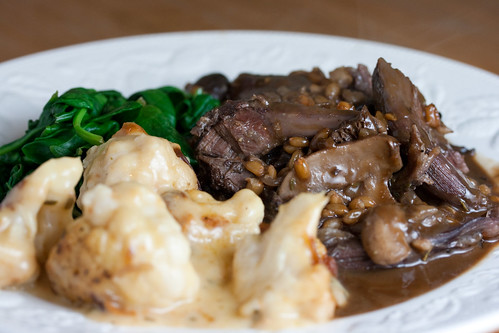
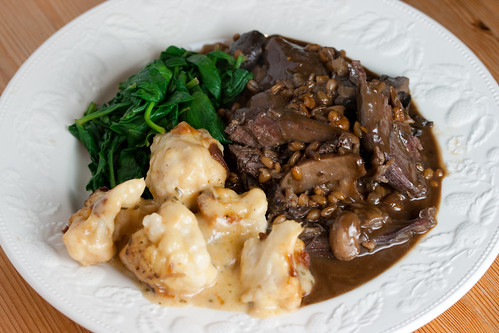
Brunost and Juniper Venison Shank with Spelt

Venison shank-3

One of the classic ways of cooking with brunost in Scandinavia is to use it to enrich slow cooked game dishes that have been laced with juniper. I first discovered it in Andreas Viestad’s Scandinavian cookbook, Kitchen of Light. The sweetness and unexpected tang help to lift the sauce away from fuggy earthiness and gives the sometimes thin liquor a glossy glow. It’s the Norwegian equivalent of adding some dark chocolate to a Mexican mole.

I picked up a handsome venison shank from Balham Farmers’ Market that would have been just as happy (and a lot more expensive) had I encountered it in Gothenburg. The meat was as dense as lead and spoke of a life of permanent effort and back-breakingly hard work.

It needed to be cooked as slowly as possible – in a way that could cope with the rich flavour of the meat and the tense meat. So I decided to throw mushrooms, red wine, spelt, juniper and onions at the casserole dish and abandoned it for the afternoon whilst it burbled away in the oven. Whilst June isn’t the normal time of year to be writing about venison shank stews – the weather right now is making me feel a bit like hibernating with a lump of brunost.

Ingredients to serve 2

1 large venison shank or 2 small shanks
100g of pearled spelt
100g of dried mushrooms (preferably porcini or morels)
100g of sliced button mushrooms
30g of brunost
A good handful of juniper berries
2 bay leaves
2 onions
2 cloves of garlic
400ml of stock to cover (but top up with water as required)
2 glasses of red wine
Salt and pepper

Rehydrate the dried mushrooms and make sure you keep the liquor.

Method:

Roll the venison shank in seasoned flour and then brown in a hot cast iron casserole dish. Remove and then sweat the onion, button mushrooms and garlic until they have taken on some colour and the mushrooms have shed some of their juice. Then add the spelt, rehydrated mushrooms (and their liquor), the juniper berries, bay leaf and venison shank. Cover with red wine and stock until well covered. Then bring to a simmer.

Once it is bubbling away, pop on the lid and place in the oven to cook for another 2 hours or so at a low heat. You must check on its progress to make sure it doesn’t dry out as the spelt with absorb a surprising amount of liquid. Top up with stock, red wine or water as you wish.

Venison shank-1

Once the meat is lethargically giving up its grip on the tendons and bones remove from the oven and drain off the liquid. Strain these luscious juices into a pan and reduce to a condensed slick of brown heaven. Check for seasoning and add more juniper berries. Then when it is getting a bit thicker, add the brunost and whisk like a madman. The sauce should thicken and become a bit fudgy. Taste it as you go and don’t over reduce because the sugars may catch. Keep this warm whilst you attend to your cauliflower cheese.

Venison shank-5

Strip the tender venison meat from the bone and assemble with the spelt and mushroom stew, topped with the glossy brunost and juniper sauce, alongside the brunost cauliflower cheese and some wilted spinach.

Like still waters, this dish runs deep. The combination of sweet and sour brunost with bitter juniper mixed with the feral depth of the mushrooms and venison make this a dish that a Viking, returning from a day of pillaging, would be very happy to come home to.

Venison shank-6

Saturday, 26 March 2011

Chilli con Oxtail

Chill con Oxtail 1

With Gothenburg’s drawn-out winter coming to a welcome end and the sun melting away the iced over canals I find myself looking forward to BBQs, grilled fish and summery salads. But whilst the sun is warm when it’s out the thermometer struggles to get above zero in the shade. Such chilly evenings mean that Stewie Griffin – my slow cooker – has still got a role to play. Although I suspect this Mexican oxtail stew is probably his last outing for many months. And fittingly, he’s gone out with a bang.

Stewie has dealt with many a chilli. As I go to sleep he takes over and nurses his tough, sinewy contents into soft, savoury, spicy, unctuousness. I love waking up to the smell of slow cooked stews. There’s something very reassuring about knowing that you’ve got a delicious week ahead.

I guess you could call this chilli con carne. But I’d like to think it’s a bit more interesting and layered than that. I never use mince and normally use shin, flank, blade or brisket. But this time I managed to get my hands on some Swedish oxtail which turned out to be quite a sensation. I've no idea how authentically Mexican this is, but I do know that I like eating it.

Ingredients

1 whole oxtail – cut into portions by the butcher
4 onions
4 cloves of garlic
2 tins of pinto or black beans
4 cartons of chopped tomatoes
2 dessert spoons of fennel seeds
1 stick of cinnamon
4 dried Chipotle chillies
4 dried New Mexico Red chillies
300ml water
1 beef stock cube
Dark chocolate
2 dessert spoons of smoked paprika
2 tablespoons of sunflower oil
Pepper
Salt

To serve

Avocado
Smoked salt
1 Fresh red chilli
Natural yoghurt or sour cream


Method

Soften the onion in the sunflower oil. Then add the garlic. And then add the paprika. Allow to sweat and then add to the slow cooker. Add some water to the pan to get out all the lovely flavours and add it to the pot.

If you can be arsed, colour the oxtail in a frying pan having dunked the pieces in seasoned flour. If you haven’t got time, don’t worry, and add the oxtail pieces to the slow cooker. Then tip in the chopped tomatoes. Then rinse the beans and add them too. Lob in the dried chillies, fennel seeds, stock cube, water and cinnamon. Turn the slow cooker on and cook on low for 6-7 hours until the meat is soft.

Leave to cool. Then skim off the layer of fat and pick out the oxtail. Remove the meat from the bones. It’s a messy job, but essential. Boil up the bones in some water in order to extract the awesome gelatin from the bones. And then add this back to the mixture along with the meat. Give the bones to a deserving dog and take the cinnamon stick out too.

Leave to mature and then spoon some of the, now very solid, mixture into a pan and heat it up. Squirt in some tomato sauce (secret ingredient), add a square of dark chocolate, ample seasoning and add some finely chopped fresh red chilli. Heat it through and if it is a bit too liquid reduce it over a high heat stirring regularly. Serve with some brown rice, a sliced avocado and either some sour cream or some natural yoghurt. Sprinkle with smoked salt and tuck in.

Chilli con Oxtail 2

Chilli con Oxtail 3

It's a rich, smoky, spicy dish with layers of heat from the 3 types of chilli. The chipotles give it a smoky tang whilst the Mexico Reds add some fruitiness and the fresh chillies give it an abrupt kick. Brown rice, yoghurt and avocado make it pretty healthy.

One of the great things about making vats of delicious slow cooked food is the fun of transforming it into different meals over the days that follow. The mixture is also great in tortillas alongside avocado and sour cream, would make a sensationally rich filling for a pie, would be knockout as a filling for a Mexican sandwich called a torta and with the sun starting to emerge would make a mind blowing topping for a burger.

Tuesday, 2 March 2010

Oriental Beef Shin & Oxtail Lettuce Wraps

Shin and bones

Slow cookers are like culinary prozac in the winter. They cure depression by making life taste better – transforming tough, scraggy meat into glorious works of edible art. Without Stewie Griffin (my slow cooker) I’d be a miserable git. But with him by my side, like a mechanical version of Ratatouille, I’m happier than a pig in a cesspit.

After successful experiments with lamb breast and oriental pork belly in wrap format, I decided to try a similar approach with beef. But instead of using pancakes to cocoon the meat I decided to use gem lettuces as boats. This also made them suitable as a starter with the lettuce lending the crunch that the soft beef lacked in comparison to the crispy lamb and pork.

This makes for a fantastic, inexpensive starter to eat communally at a dinner party. Or could play the role as a main course. The beef itself would also make a fantastic filling for oriental dumplings or with some noodles and a stir fry.

Ingredients to feed 10 as a starter:

1 shin of beef
4 pieces of oxtail
Star anise
Half a jar of five spice
Knob of ginger
2 chillies
1 stick of cinnamon
300ml Chinese cooking wine
100ml dark soy sauce
150ml mirin
1 cucumber
A bunch of spring onions
4 gem lettuces

Oxtail

Shin

Method:

Cut up the shin into thumb sized pieces. Season. Then brown the shin and oxtail and place in the slow cooker. Do this in batches so it caramelises rather than stews.

Pour the liquids into the pan to deglaze and burn off the alcohol in the mirin and wine. Then add the five spice, star anise, ginger, cinnamon and chili to help them mingle. After a minute or two pour this mixture over the beef in the slow cooker and let it cook gently for 5 hours.

Once the beef is tender and pulling away from the tail, remove it and separate the meat from the liquid. Allow the meat to cool and then shred it.

Strain the liquid and reduce to a syrupy consistency. Add sugar to sweeten towards the end. You’ll probably need a couple of table spoons. But it depends how you like it.

Before serving slice the spring onions and cucumber thinly and wash the lettuces and take out the heart.

Beefy lettuce wraps

Arrange on a large serving plate and tuck in. The meat will be soft and incredibly tender with spicy layers that seem to love the freshness of the lettuce, cucumber and spring onion. You could do this with just oxtail, but adding shin ensures yo have enough meat to go around. The oxtail adds a silkiness to the meat and a glossiness to the sauce.

Oriental slow cooked beef

Further reading:

Chinese Oxtail with Asian greens
Bún bò Huế
Chinese Braised Oxtail Stew
Aromatic Chinese Oxtail Stew
Slow cooker recipes on The Paunch

Thursday, 18 February 2010

Crispy Mongolian Lamb Pancakes

With a feat of cosmic jiggery pokery the stars aligned themselves in such a way that there was no way I could have made anything but crispy Mongolian lamb pancakes. With Chinese New Year, Shrove Tuesday and my recent purchase of a breast of lamb all coinciding so aggressively that I am beginning to think I might be in the Truman Show.

I’ve been wanting to cook lamb breast for ages having read about it in HFW’s Meat book. Apparently it is great if you cover it in breadcrumbs and then grill it. It’s so riddled with fat that you struggle to find any meat which makes you wonder whether they might be more suitable for soap manufacturers or plastic surgeons. If you are a lover of lean, prime meat, lamb breast is not going to be your thing.

But, if like me, you think that devouring crispy, salty lamb fat is one of life’s purest pleasures, lamb breast is a dream. With a double cooking method of poaching and then grilling you can transform skanky carcase into culinary crack.

This recipe is inspired by Cooking the Books and is amazing. It served as a brilliant follow up to last year’s crispy aromatic pork belly recipe. And I am very proud to say that it won this year’s highly competitive pancake competition with a sensational green Thai pheasant curry filling from Nick and Harriet coming in second by half a vote.

Ingredients:

100ml of dark soy sauce
200ml of Chinese wine
1 large chunk of ginger, peeled and cut into pieces
1 seeded red chilli
3 sticks of Chinese cinnamon
4 star anise
¼ jar of five spice
1kg of unrolled lamb breast
Enough water to cover
5 dried Chinese mushrooms
2 tablespoons of brown sugar

Method:

Stage 1. The day before you want to eat this, chuck everything into a large saucepan and then cover with enough water to ensure the lamb is just submerged. Simmer for 3 hours with the lid on. Your kitchen will smell amazing. The combination of ginger, cinnamon and five spice with a background note of lamb is sensational.

Remove the lamb and place it in a bowl. Cover in cling film and chill until needed. Strain the remaining, fatty liquid into a separate bowl, cover in cling film and chill.

Stage 2. Remove the bowls from the fridge. Lift the layer of solidified fat, which will look like a slab of white chocolate, off the sauce and discard. Pour the liquid into a sauté pan and reduce until it becomes syrupy.

Stage 3. Shred the lamb and shake some salt over it. Then place under the grill for around 5-8 minutes until it crisps up.

Mongolian Lamb

Spread some crispy lamb in a pancake and accompany it with some sliced spring onions and cucumber before anointing with the dark sticky sauce. The combination of crunchy, salty, heavenly lamb with the cooling greenery and sweet sauce is bliss.

Mongolian Lamb pancake

Further reading:

Spring breast of lamb with lemon and rosemary
Greek breast of lamb
Curried crusted lamb breast
Easter stuffed breast of lamb
Breast of lamb with tartare sauce
Lamb breast stuffed with bacon and apricots


If you've got any amazing lamb breast recipes please let me know.

Thursday, 11 February 2010

Ox Cheek Open Ravioli

If I was to pick two things that get me excited in the kitchen at the moment it would be cheeks and Waitrose’s “Forgotten Cuts” range of slightly leftfield meat. My recent experiments with pigs cheeks as sausage rolls, piggy Wellingtons and covered in a bourbon and mustard glaze were a thrilling success. So I thought I’d graduate on to ox cheeks.


Ox cheeks are pretty hard to get hold of. Because of BSE they were banned along with other meat from around the head and cuts on the bone. And since then it has been consistently difficult to find them. After a quick trawl of eGullet the picture became clearer. Restaurants and butchers find it hard “to get head” because the head is not allowed to leave the abattoir owing to the rules that are designed to protect the public from being exposed to the brainy bits that are linked to BSE/CJD. And even if butchers do manage “to get head” they have to have a vet present whilst they do what they do.

Despite all this you can buy expensive ox cheeks from the likes of Donald Russell, but it’s much more convenient and cheaper to pick some up from Waitrose where two hefty cheeks will set you back a meagre 4 or 5 quid.

The beauty of ox cheeks doesn’t lie in the eye of the beholder. They are ugly brutes which have spent their working life grinding their way through grass. The meat is dense. To slice through a cheek makes even the sharpest knife feel a bit James Blunt. Through the centre of the cheek runs a seam of fat and connective tissue. Like the band of gold that sits below Johannesburg, this is the where the true joy of ox cheeks lies. When cooked slowly this seam, as if by alchemy, turns to a gelatinous, unctuous, savoury elixir that will turbo charge the dish you are cooking.

With my ox cheeks in the freezer I pondered what to cook. It seemed too obvious just to cook a daube or use them as the base to a pie. Ox cheek biltong almost made the cut. As did a Chinese hot pot strewn with chillies and spiked with garlic and soy. And then I remembered reading about cheeks and ribs in Bill Buford’s Heat and was inspired to cook ox cheek ravioli in the spirit of Mario Batali. I didn’t follow a recipe at the time but was quite chuffed when I found a version afterwards on the New York Times website that wasn’t a million miles away. The recipe below is my own.

Ingredients – to feed 4

Filling


2 large ox cheeks
Half a bottle of red wine
1 tin of chopped tomatoes
1 large onion
2 cloves of garlic
1 celery stalk
5 rashers of smoked bacon – or lardon
3 bay leaves
Loads of thyme
2 glasses of cognac
50 grams of plain flour
200ml of chicken stock
500 grams of chestnut mushrooms
400 grams of vine tomatoes
Salt
Pepper
Parmesan

Pasta


200 grams of tipo 00 flour
2 eggs
Salt
Splash of water

Method


Start the braise the night before you want to eat. Cut your cheeks into quarters and coat in seasoned flour. Heat a large pan and brown the meat in oil in batches. When the outside of the meat has caramelised throw in some cognac and watch out for your eyebrows. Then place the cheeks in your slow cooker – or if you are unfortunate enough not to have one then just lob them in a large casserole. Then fry the bacon until the fat has rendered and then add a finely chopped onion. Turn down the heat and sweat. Then add your garlic. After a few minutes add this to the slow cooker. Chop your celery and add it to the pot. Then add 3 bay leaves and loads of thyme.

You then need to add the liquid elements which you want to only just cover the meat. The quantities above are a guide so feel free to adjust them to what you feel looks right. Grind some pepper, put the lid on, set your slow cooker to low and then go to sleep. If you are being sensible you’ll use a timer that will turn the cooker off after 5 hours. It’s a much better idea than setting your alarm for 4am!

Ox cheeks

Stiff stock

In the morning separate the meat from the liquid and store both in the fridge whilst you go to work. When you return from the office you need to start by taking a deep breath and get all your kit out in order to reduce the sauce, make the pasta fresca and finish the meat in the oven. This is where the fun starts.

Your first task is to strain the liquid. I was amazed when I removed the container from the fridge. The liquid had set so solidly that it was able to support the weight of a spoon! Heat it first to turn it into a liquid and then pass it through a colander to remove the bacon, celery and onions and then force it though a fine sieve. Then reduce this liquid whilst you make your pasta. It will turn into the most syrupy, glossy sauce you can possibly imagine.

Then, layer the bottom of a cast iron pan with the solids that you have removed from the liquid. Then refry your cheeks in oil and butter until they take on a deep brown colour. Then place them in the cast iron pan. Fry the mushrooms in the pan that has just been graced by the cheeks, add a touch more cognac and then add them on top of the cheeks. Cover in foil and place in the oven to heat through along with the tomatoes in a separate pan which have been coated in olive oil and salt.

Now it’s time to make your pasta. It’s quite simple. Sieve 200 grams of pasta flour and add two large eggs and a pinch of salt. Knead this until it forms a non sticky dough. This will take about 15 minutes of sweat and wrist pain.

Wrap in clingfilm and let it rest in the fridge for up to an hour. Then sprinkle a large, clean work area in flour and roll out your pasta into thin sheets. Normally I’d use my pasta maker but I didn’t have it to hand. Without the machine it was seriously hard work. Cowie and I took it in turns to pulverise the pasta into ravioli thickness. Once it becomes around 1mm thick (or more accurately thin) trim the edges and hang up to dry for 10 minutes. Then cut into neat squares.

Bring a large pan of salted water to the boil and then add the pasta. It will cook in around 2 minutes. So make sure you’ve got your sauce reduced, the meat resting and the roasted tomatoes to hand. Ensure your guests are seated with a large glass of Italian red wine.

Add a square of pasta to the bottom of the bowl. Then a layer of ox cheek and some sauce. Then another layer of pasta. Then a spoonful of glossy sauce. And then a few tomatoes on top. Then a liberal sprinkling of parmesan and a turn or two of black pepper. Then serve.

The pasta was perfect. But the star was undoubtedly the quiveringly tender cheeks which almost shouted with flavour and swooned under the glossy sheen of the deep, dark sauce. The tomatoes added a burst of sweetness and the three year old parmesan from La Fromagerie added a grainy, creamy salinity and umami punch. It’s always hard to comment on a dish you’ve invented and made yourself… but it was awesome.

Ox Cheek Ravioli

The open ravioli technique worked brilliantly, behaving a bit like lasagne, or a pasta sandwich! But next time I’d like to make tortelli or ravioli properly having been inspired by Gastro1. They just look a bit fiddly and have a tendency to leak water. But I will do my best to conquer them.

Louis from Spilt Wine suggests drinking 2007 Mus ‘T’ red from Domaine de la Graveirette with this dish.

Further reading:

Dos Hermanos has got a great recipe for Beef Rendang that would work brilliantly with ox cheeks
The British Larder has a great post about a dish from Sat Bains featuring ox cheeks and oysters
New York Times with Mario Batali on ox cheeks
Waitrose "Forgotten Cuts" forum
eGullet on ox cheeks

Tuesday, 3 November 2009

Ham Hockusai

37734257

To say my parents are keen gardeners would be like saying that Prince Phillip is a trifle conservative. Mum writes gardening books and is a garden designer. Dad spends every second he’s not at work in his overalls doing as Mum says…

Our garden has developed over the 20 years we’ve lived there from being a bunch of fields into a gallery of different artistic rooms . Mum and Dad have created amazing garden rooms inspired by Hepworth, Monet, Rothko, Mondrian, Kandinsky and Hokusai.

lightcatchers_aug_08_kandinskyIMG_9287_op_800x531

stevman14

hokusia2008IMG_9756_op_800x531

monet_broad_second_IMG_9497_op_800x531

mondrianvuewIMG_9713_op_800x531

Mondrian taxis at junction

It’s a very lateral approach to gardening that oozes creativity. The idea is not to copy or try to replicate the art/painting but to capture the mood and the concept behind it and express it as a three dimensional piece of living, breathing art that might otherwise be called a garden!

So I thought it would be a good idea to pick up where Mum, Dad and Hokusai left off and create a dish that’s inspired by an artist. And when I picked up a cheap as chips ham hock in Waitrose I couldn’t resist creating a dish called Ham Hockusai.

Feeling excited and bubbling over like a glass that’s full to the brim with water and then is depth charged with Berocca, I sought help on Twitter. Lizzie came to my help and suggested braising the pork hock in a mixture of soy, ginger and mirin. We used this as inspiration to create what might otherwise be called a ham hock ramen…

Trim your ham hock. Because you are going to slow cook it you don’t want too much fat floating around. Then put your hock in the slow cooker (AKA Stewie Grifin) and pour in half a bottle of light soy, a sachet of miso soup powder, and enough stock to cover the hock. Then throw in some spring onions, a generous amount of root ginger, 2 star anise, a few chillies and a glug of sake and mirin. Turn on the slow cooker and allow it to bubble away for 5 hours, or until the meat yields.

Pork Hockusai Cooking

Then separate the meat from the liquid. Set the meat aside and strain the liquid to remove the floating vegetation. This liquid is like gold dust, so don’t spill any like I did!

Pour the liquid into a pan and place on the heat. Meanwhile, pull the pork apart and keep nearby. Heat a wok and make a stir fry of enoki and shitake mushrooms, pak-choi, beansprouts, garlic, ginger and more chilli. Then add the meat to heat through.

Add some ramen noodles to the broth and once they are soft assemble your Ham Hockusai in a large soup bowl and garnish with sesame seeds and spring onions. I did my best to recreate the Great Wave off Kanagawa but gravity got the better of my noodles!

Pork Hockusai Wave

This has no pretention of being the most authentic Japanese dish. But it was not only huge fun to cook, but incredibly tasty and healthy to eat. The depth of flavour from the stock just kept on going. The pork itself was a delight. It transformed from being tough, flabby and generally being a bit like a tight-head prop into a graceful winger.

Next time, we’re going to cook Ham Hockney – I’m just less sure how to cook it. If you’ve got any suggestions about how to make a piggy David Hockney dish or any other artist inspired recipe I’d love to know.

Have a look at Mum's website and blog to find out more about the garden. It's open to the public a handful of times a year and you can also book for private groups.

Thursday, 9 July 2009

Squirrel au Vin

Rad has been putting his air rifle to good use. The irritation of squirrels eating his lovingly nurtured fruit and veg got too much and resulted in me receiving a very unusual text message that read:

“I’ve shot a squirrel! Fancy coming over tonight to help me cook it?”

Feeling a bit like Batman responding to Commissioner Gordon’s urgent phone call, I notified Alfred (AKA Cowie) and jumped into our Batmobile (Peugeot 206) armed with a camera and a few ideas for squirrel recipes.

Inspired by Hugh F-W, Rad had skinned the squirrel so all we had to do was butcher the meat and cook it.


The meat was firm, pink and very lean. It smelt fresh had a reassuring dryness. Early summer isn’t an ideal time to eat squirrel because they tend to be young and scrawny. The ideal squirrel is fattened by eating too many acorns and nuts and is far plumper.

Squirrel angle

Squirrel butchery

After our hare experience, we decided that slow cooking was the way forward and opted for a bastardised version of the classic coq au vin.

We fried some bacon, onions, garlic, carrots, mushrooms and celery and added them to a casserole dish.


Then we browned the squirrel meat and deglazed the pan with red wine…


… and poured it all into the casserole.


It bubbled away for several hours before being deemed ready to eat. Sadly, Cowie and I had to return to the Batcave and never got to taste it. Rad thought the flavours overwhelmed the squirrel which is a shame. So next time we might do a squirrel roast and serve it (appropriately) with a cherry sauce as Ollie has suggested on Rad’s blog.

I’m now keen for Rad to shoot a few pigeons so we can make Moroccan Pastilla.

All the amazing square photos are from Rad's brilliant blog.

Friday, 23 January 2009

Chorizo, butter bean and pasatta stew

On Sunday we Christened Victoria's slow cooker with an epic stew. January calls for rich, warming dishes. Oozing with depth and not without a hint of gluttony. If anyone accuses you of over eating just tell them your about to hibernate.

This stew is one of my favourites and is heavily lifted from Nigel Slater. But I've done it so many times and adapted it so much I reckon it is now firmly mine.

Here's what you need to do.

First things first, buy a slow cooker. They are awesome. Once you've got one, turn it on. And then flame some red peppers as so...

Charring in process

Charred peppers

I adore the smell of them burning over the gas flame almost as much as I love the colours when you photograph them.

Then sweat a shed load of onions until they are beginning to colour and then add a good couple of teaspoons of smoked paprika. The one in the red tin is excellent. They sell it in Brindisa. Chuck in some finely chopped garlic and watch the pan turn red and feel your nostrils stand to attention. It's a captivating smell that I'd dearly miss if I ever stopped cooking.

Smoked paprika onions

Pour 3 tins of butter beans (having rinsed them first) and as much pasatta as you can get your hands on into the slow cooker. If you run out of pasatta don't be afraid of unleashing a few tins of chopped tomatoes. I bought some great tomato "sauce" in Borough Market which was idea. Otherwise just use the stuff from a carton as it is less heavy to cart home from the shops.

Tomato sauce hand

Add the parika'd onions to the stew along with the peppers. Pop the lid on and bring up to the heat. Once it has been simmering for a while add your chorizo. Ideally it should be a soft picante version. This will ensure a rich, spicy, oily stew which makes you yearn to be called Juan. If it just the bog standard hard chorizo that is only slightly spicy, you'll want to add some chili. Our chorizo came from the French market that was held in Balham just before Christmas. It was packed full of flavour which really held its own later.

Chorizo

Replace the lid and allow to burble for 5 or 6 hours. We went for a coffee, played squash and went cycling whilst our stew was cooking. But this is optional. As is the playlist below. But I find Four Tet, A Guy Called Gerald, Mr Scruff and Massive Attack are ideal for cooking to on a Sunday.

Playlist

Once you've returned from your day out you'll be rewarded with a scarlet stew, burning with flavour and bursting with a heady smell of tomatoes, pork fat and paprika. It's a sure fire way to make people hungry. It's quite a good idea to take the lid off the slow cooker for the final half an hour or so to allow some of the water to evaporate. This helps to concentrate the flavour and make the stew a bit thicker. Test the seasoning and add chili and smoked paprika as appropriate.

You've now got a few options:

1. Serve as a soup with some crusty bread

2. Boil some rice and treat it as a chili con carne but with out the mince

3. Or do what we did and make some mashed potato, steam some cabbage and poach and egg. I've tried it each and every way but can proudly report that the egg and mashed potato option is by far the best way. The egg yolk bursts over the stew and adds an extra layer of flavour, whilst the cabbage adds a welcome burst of green, iron to an otherwise very red plate of food.

Chorizo stew

Serve with a sprinkling of parsley and be prepared to dish out seconds. It's such a delicious meal. And better still it matures brilliantly. I've had it at work for lunch twice since and it has been even better each time.

If you are as obsessed with chorizo as I am, here are a few other ways of cooking with it:

Chorizo lasagna
Chorizo stew
Chorizo pie

Wednesday, 12 March 2008

Comforting Chorizo Stew

Whenever I've been to Spain I've loved gorging myself on chorizo and morcilla. I think it's probably the naughtiness of it all. I land up with a huge red grin and a insatiable desire to drink up all the "juice" which is just spicy fat!

Some time last year Nigel Slater wrote an article in the Observer Magazine explaining the roles and cooking methods for the various types of chorizo you increasingly find at markets and delis. I found myself some boiling chorizo in Waitrose and recreated his chorizo and chickpea stew which transforms wintry Sunday evenings into an experience you never want to end. Since that moment I have been busy trying to perfect my own version of the chorizo stew which has a few variations from Mr Slater's.

Sweat a couple of onions in oil and butter. Add some salt to speed things up. Then lob in a few cloves of chopped garlic and some sliced mushrooms. Once this has all turned into a beautiful brown slick open up your designer smoked paprika tin and stir in 3 tea spoons of the firey red powder.


Breathe in deeply and feel your nostrils transport you to a tapas restaurant in Barcelona and watch as the oniony goo does a bit of an Enoch Powell and turns blood red.

Be careful not to let the mixture burn and add a good squirt of tomato puree and then some plum tomoatoes who's juice you've discaded and flesh you've chopped a bit. Then pour in a carton of passatta and some tinned butter beans. Make sure there is space in the pan to accommodate your boiling chorizo and pop them in. Cook on a low flame for as long as you can manage. If you're like me it won't be long before you've started boling your rice, flaming your red pepper and have got an egg ready to poach!


Garnish with a bit of parsley and charred red pepper. Then spend an inordinate amount of time getting the lighting right for your money shot photograph. Then savour with a glass or two of bold red wine with the opening session of the test match in the background. Bliss.

Tuesday, 4 December 2007

Shin of Beef Lasagna and Coconut Rice Pudding

The beauty of days off work is that you can indulge your cooking fetishes to your heart's content. I've been keen to make some fresh pasta and a rice pudding for a while so today seemed like a good opportunity to have some fun.

I bought a shin of beef from the local Halal butcher in Balham and agressively browned it in medium sized chunks. Next I cooked a batch of pancetta and then tossed in 5 cloves of garlic to bring their flavour out. All this was lobbed into Stewie, my slow cooker along with a jar of passata and some choppoed tomatoes. In too went a splash of red wine, some pepper, some sweated shallots, a smidgen of mushroom ketchup and a small prayer. I let this tick over for around 12 hours until the shin had transformed from being a tough brute into a silky princess. The soft beef pulled apart and broke down into a rich, deep ragu. Perfect for my lasagna.


Whilst the ragu was slowly spluttering away I had ample time to make my pasta from scratch. I bought some special pasta eggs and tipo 00 flour from the Northcotte Road in order to do it properly. The eggs were bright orange and the pasta was super fine.


Making pasta is easy. Simply use 100gr of flour for every egg. I used two eggs and 200gr of flour which by sheer chance turned out to be exactly the right amount. Kneed the eggs and flour together to make a dough. After a while it will begin to cohere and look like the picture below.


Pop it in the fridge and leave it there until it's time to roll it out. Use a pasta maker to roll the dough out into thin sheets that fit the dish you're going to cook the lasagne in.

To make the white sauce simply make a white sauce and add some cheese. You can add some mustard and nutmeg if you want but it doesn't matter too much. The bechamel is very straight forward. Just don't burn it or let it get lumpy. Whilst it was finishing off I tossed some spinach in a hot wok and blasted some mushrooms to use in a secret layer!

When filling the dish put the ragu at the bottom then top with a layer of pasta. On top of this I put the wilted spinach and mushrooms which in turn were topped with a layer of pasta. Add more ragu on top of this making sure to push it into all the corners then add another layer of pasta. Then slosh the bechamel sauce on top and grate some parmesan on to finish.

Place in the oven.


Romove.


Enjoy.


We guzzled our lasagne with a light salad with flame grilled red peppers and some roasted tomatoes. It was delicious and worth every ounce of effort and time!


As if a vast helping of gooey lasagna wasn't enough we tucked into our coconut rice pudding with glee. To make it simply visit the BBC Food site, look at the recipe and bastarise the hell out of it. I used 200gr of pudding wine, 2 tins of coconut milk, a tin of evaporated milk, about a litre of full cream milk, some single cream, a few tea spoons of sugar and some coconut shavings. Pop this in the oven for a few hours at 150 degrees celcius and try not to burn your hands!

Add some milk if it gets too dry - I found I had to top it up quite a few times. And enjoy.


I can't think of many better ways to enjoy a day at home than to cook for friends.

LinkWithin

Blog Widget by LinkWithin