Wednesday, 3 November 2010

Beetroot Curry

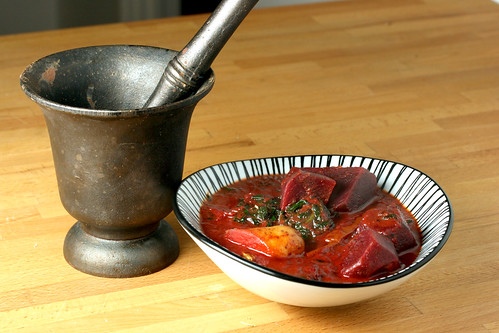
Beetroot curry

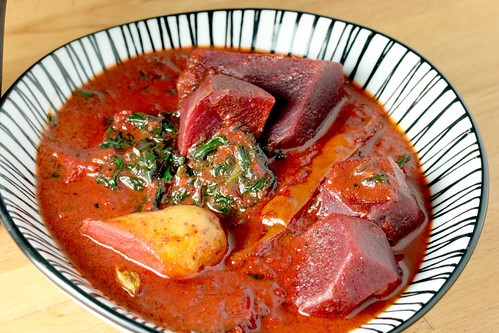
Has Browners gone completely insane? Beetroot curry sounds repulsive. He must have gone native. What’s next, pickled herring soufflé? A dill and walnut chocolate cake? Lingonberry scrambled eggs? But fear not. Beetroot curry is actually rather good. And fabulous to look at.

As you may have noticed, I’ve become rather attached to beetroot since moving to Sweden. It’s all part of my effort to eat more vegetables, to cut down on expensive meat and to become a bit healthier. And it turns out that beetroot are a blessing. They’re tasty, healthy, filling and hold their own against robust flavours. But would beetroot be able to cope with curry?
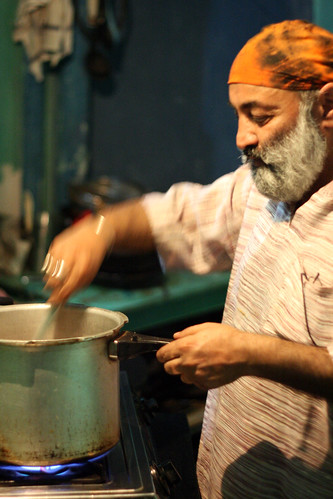
Chicken curry chef

When Cowie and I were in India this time two years ago, we had a couple of cooking lessons from some of our hosts. I’ll never forget this chap at the Villa Rivercat in Goa patiently whipping up an incredible chicken curry with spices that were so expressive they were like Eddie Murphy after a dose of amphetamines. We both came back from India feeling incredibly healthy having eaten mainly vegetables and fish throughout our trip.

Inspired by thoughts of India I hatched a plan to create the reddest curry every seen and set off in search of spices. The Curry House, in the quaint district of Haga, has every spice known to mankind. And then some. They even sell bizarre things like black feathers, rhubarb root and lots of exotic medicines. It’s a bit like the market in Munnar, but less crazy.

Umbrella market man

Armed with fennel seeds, cumin, star anise, cardamom, dried red chillies, mustard seeds, turmeric and a massive bag of orange lentils I aromatically waddled back to my flat to do battle with the beetroot.

Ingredients:


10 beetroot
10 small potatoes
1 bag of fresh spinach (or can be frozen)
1 can of coconut milk
6 tomatoes
2 onions
2 cloves of garlic
Chicken/vegetable stock
2 thumbs of ginger
1 dessert spoon of cumin seeds
1 desert spoon of fennel seeds
1 dessert spoon of mustard seeds
1 desert spoon of coriander seeds
10 cardamom pods
5 star anise
2 desert spoons of garam masala
6 dried chillies
Vegetable oil
Coriander leaves
Salt

Method:

Roast all the spices (apart from the garam masala and cardamom) until they are aromatic but not burnt. Then pound to a dust in a pestle and mortar.

Sauté the onion until soft then add the chopped garlic and cook for a few minutes. Then add the grated ginger and breath deeply. A few minutes later throw in all the spices including the garam masala. Allow to mingle and cook for whilst you heat your stock up.

Pour in the hot stock and then add the chopped and peeled beetroot along with the dried chillies and cardamom. You want the liquid to be covering the beetroot.

Allow this to bubble away for about an hour with the lid on – until the beetroot begin to become tender. Then add the halved potatoes and take the lid off so that the liquid reduces. Once the potatoes are becoming tender add the can of coconut milk and 6 finely chopped tomatoes.

Taste for spice levels and seasoning and adjust accordingly with some chopped fresh chillies. At the last minute, stir through some spinach. Sprinkle with chopped coriander and serve.
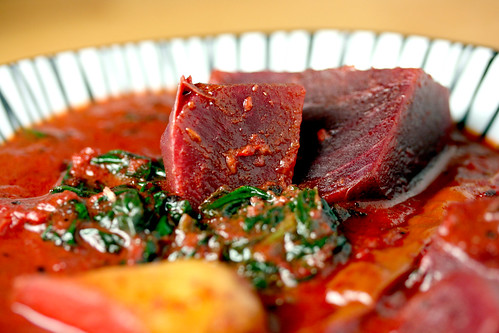
Beetroot curry close

I had it straight up with no rice, lentils or bread. But I think it would be best served with a chapatti or steaming hot naan. Whilst it might be an assault on the eyeballs it’s a delight to eat.
Beetroot curry top down

I made a large vat of it and lived off it for most of the week. You can add some pork or chicken when you are craving a bit of meat.

Further reading:


Beetroot curry recipe from One Bite at a Time
Beetroot curry recipe from Coffee Muffins

Wednesday, 27 October 2010

Three Ways with Beetroot Gnocchi

Beetroot Gnocchi1

In it’s own right, most pasta couldn’t be more bland. Beige and almost flavourless it is like a silent servant being ordered around by the other ingredients. It’s one of the reasons I’ve been neglecting pasta. So in my quest to eat less refined carbohydrates and following the success of my experiments of using root vegetables as pasta substitutes I decided to have some colourful fun creating beetroot gnocchi.

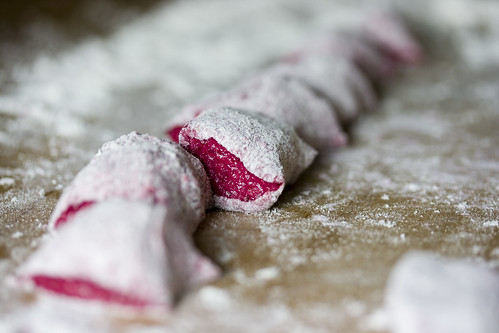
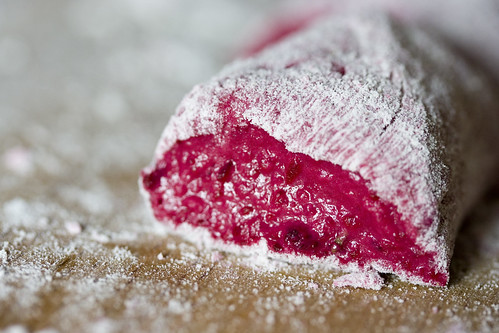
In my head it seemed a fairly simple task. Substitute the potato for beetroot, mix in some flour, add an egg, season, knead, prove, roll into a sausage, chop into nuggets, boil and serve. But I hadn’t accounted for the fact that my kitchen would transform into a blood bath, or that my hands would be caked in lurid red Playdough rendering me incapable of doing anything. But it was well worth all the scrubbing and hard work.

I made enough dough for several meals so played around with various beetroot friendly flavour combinations. Of all the combinations I tried, a simple pairing with a lip pursing goat’s cheese worked well as did a creamy chanterelle sauce and a bowl of super charged aniseed soup with beetroot gnocchi dumplings.

Beetroot Gnocchi


Ingredients


6 large beetroots
2 large potatoes
1/6th weight of beetroot and potato of plain flour
1 egg

Method

Boil the potato until tender, drain, allow to cool for a bit and then mash. Do not under any circumstances whiz in a food processor as it will become gluey and the texture of the gnocchi will be damaged.

Roast the beetroot on a bed of rock salt for 40 minutes. Others suggest boiling or steaming them, but having tried different methods, the salt roasting technique is best. The beetroot keeps its colour better and the flavour is enhanced. Remove the beetroot from the oven and allow to cool. Remove the skin and blend in a liquidiser.
Combine the beetroot puree with the potato and marvel at the bright red mixture.

Season with salt and pepper. Next beat in the flour and the egg. Keep adding flour until the mixture turns from unmanageable red gunge to a well behaved dough. It took far more flour than I had expected to achieve this, so be patient.

Once it is becoming dough like transfer the mixture to a well floured work surface and knead like you’ve never kneaded before. Make sure your hands are well floured and you are wearing a T shirt you don’t care about much.

Tear off a piece of dough for your serving and roll into a thin sausage shape. Roll in flour and cut into little nuggets.

Beetroot Gnocchi3

Boil in well salted water until the first red blob floats to the surface and then drain immediately. Serve with any of the flavour combinations below.

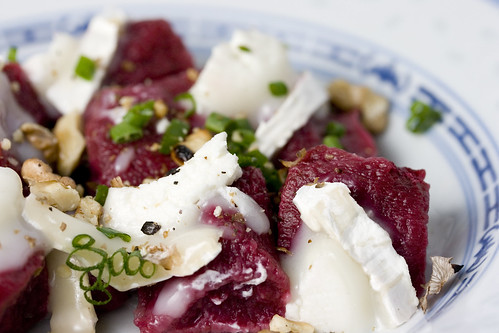
Beetroot Gnocchi with Goats Cheese, Toasted Walnuts and Chives

Beetroot Gnocchi6

Once cooked, simply place the gnocchi in a bowl, top with goats cheese and toasted walnuts and place under the grill for a few moments to melt the cheese. Then sprinkle with finely snipped chives and season maniacally with salt and pepper. It’s a delicious autumnal lunch time dish that, once you have made the dough, is unbelievably simple to make. The subtly earthy flavour of the beetroot was a super match for the sharp cheese and the soft texture was enhanced by the crunchy walnuts.

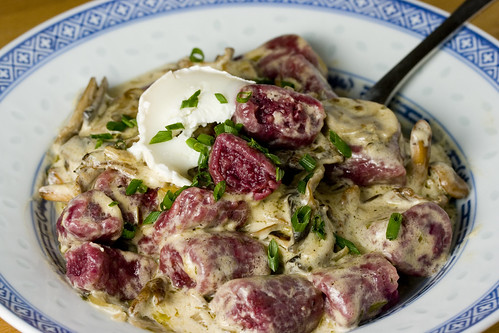
Beetroot Gnocchi with a Chanterelle and Goat’s Cheese Sauce

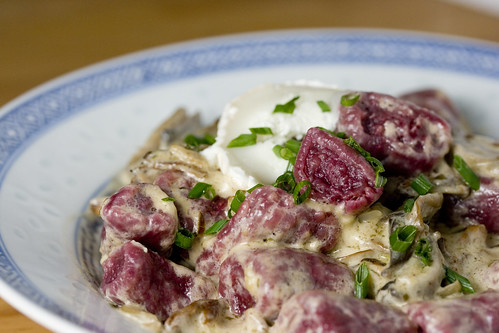
Beetroot Gnocchi with wild mushroom sauce1

The woody, earthy tones in mushrooms and beetroot are made for each other. Coupled with a splodge of crème fraiche and a knob of goat’s cheese it made for a more indulgent main dish than the previous version.

Sauté two large handfuls of chanterelles in butter and olive oil over a high heat. Sprinkle with salt and continue cooking until they have leached their water out and taken on some colour. Lower the heat. Then add a finely minced clove of garlic and cook for a few minutes to take the raw edge away. Then add several spoonfuls of crème fraiche and bubble away until it has become saucy. Toss in the goat’s cheese and then slather over your just boiled beetroot gnocchi.

Beetroot Gnocchi with wild mushroom sauce2

Garnish with chives and sprinkle with smoked salt and season with black pepper. Just writing this makes me want to eat it all over again, but this time either with a glass of white wine like a Grüner Veltliner or something more woody like a Chassagne-Montrachet.

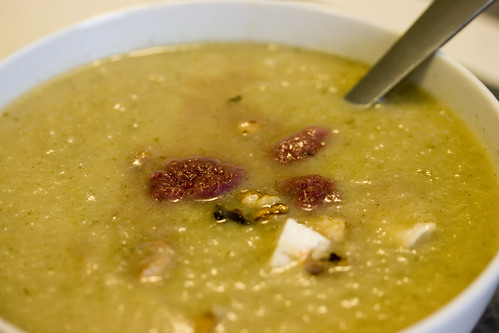
Fennel Soup with Beetroot Gnocchi Floaters

Fennel soup2

Being very partial to the taste of anise I decided to buy up my local store’s stock of fennel bulbs and make a fennel soup supercharged with star anise and tarragon.

I simply roasted 4 chopped fennel bulbs until golden with a couple of shallots and 5 star anise and then added them to a pan of simmering water with a glug of chicken stock. I removed the star anise and then blitzed in a food processor before seasoning and topping with beetroot gnocchi and a sprinkling of goats cheese and walnuts.

The photo doesn’t really do it justice. So you’ll have to take my word for it that it’s a cracking combination and is something I am going to make time and time again. I’ll just have to work on the presentation!

If you’ve been inspired to make some beetroot gnocchi by this post, I encourage you to make a large amount and store the remaining dough in the freezer. After the fun of making beetroot gnocchi, my next task is to do something similar with all the glut of pumpkins that November is promising.
If you’ve got any further ideas about what to do with beetroot or pumpkin gnocchi please let me know.

Sunday, 3 October 2010

Back to Nature at Kolarbyn

Trees 2

After losing to Sweden at football, then England manager, Graham Taylor, famously put the Swedish victory down to the fact that Swedes “tend to be of an outdoor pursuit". He rightly got ridiculed by the British press and earned the nickname Turnip Taylor as a result! But ever a true word has been said in jest. England lost because Sweden played better, but he was right that Swedes love being outside. And when you get a taste for how stunning the countryside and coastline is, you understand why.

With this in mind, when Cowie arrived for a Swedish weekend with Edwin and Anna, I hatched a slightly insane plan that involved 900km of driving and a weekend of no running water, toilets or electricity! But what we lost in creature comforts we more than made up in tranquility and memories that will last a lifetime thanks to the enchanted forest and mysterious lake at Kolarbyn. It’s a former charcoal making forest that now operates as the “world’s most primitive hotel” where you sleep in log cabins and explore the forest in search of moose, bears, mushrooms, wolves and fairies.
After a 5 hour drive from Gothenburg, towards Stockholm, through biblical rain showers we arrived at Kolarbyn in a spotlight of sunshine and a breath of virginally pure air. The roads leading towards the clearing made me feel like the Stig and would have made Jeremy Clarkson feel like he’d broken down and gone straight to motorists’ heaven.

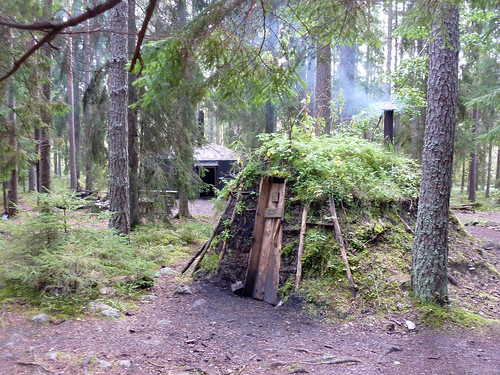
When Andreas, our super charming host/ranger, showed us around the clearing we were so excited that all we could do was exchange grins and stifled gasps of wonder. It was like a cross between Hansel and Gretel, Narnia and Lord of the Rings, except without the evil monsters lurking behind every tree. Our moss covered, log cabins were as primitive as the website has suggested. But that isn’t to say they weren’t the cosiest hotel rooms I’ve ever seen. Each one was fitted with a log fireplace and two benches to sleep on with a sheepskin for a mattress.

An essay about our weekend won’t do it justice. So I’ll let the photos and a few brief captions do the job instead…

Anna impact 2

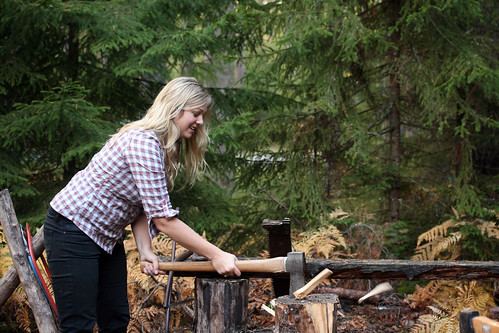
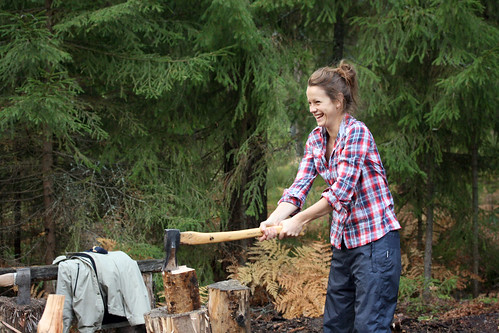
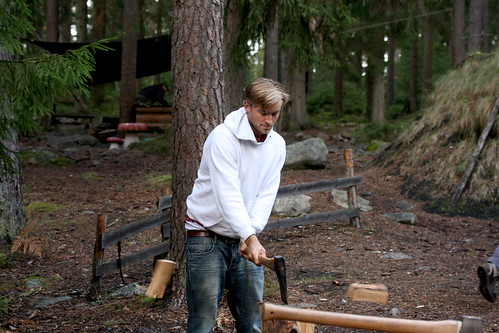
We kicked off by chopping our wood for the night and soon discovered that Anna had been born to be a lumberjack...

Edwin axe 2

she put Edwin's use of a lady axe to shame.

Cowie giggle

Meanwhile Cowie got the giggles...

Watch out Cowie 3

which set Anna off into a fearsome rage!

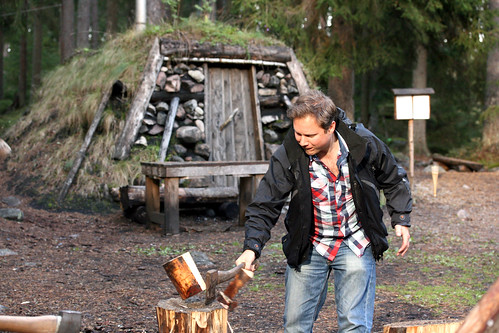
Me axe 2

And I almost took my leg off with an enthusiastic swing!

Jesper 2

Our huts were like mini hobbit houses...

Mud cabin

with grass, moss, weeds...

Mushrooms growing out of hut

and mushrooms growing out of the roof.

Team rowing

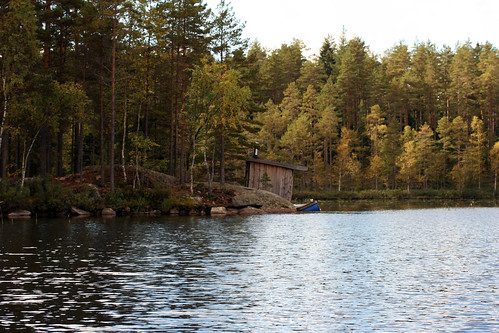
After lighting our fires in our cabins we headed to the lake and rowed across to the floating sauna armed with logs, firelighters, matches, swimming costumes and a box of white wine.

Floating sauna

Whilst we waited for the sauna to heat up we tucked into ice cold white wine whilst watching the sun set over our lake.

Dusk lake view

It was one of the most perfect experiences I've ever had and only got better and better. After three quarters of an hour we stripped off and hopped in the sauna which was now roasting hot. After half an hour of blissfully relaxing heat we braced ourselves and dived into the chilly lake. I swear at that moment we were the four happiest people in the whole world.

Meatballs 2

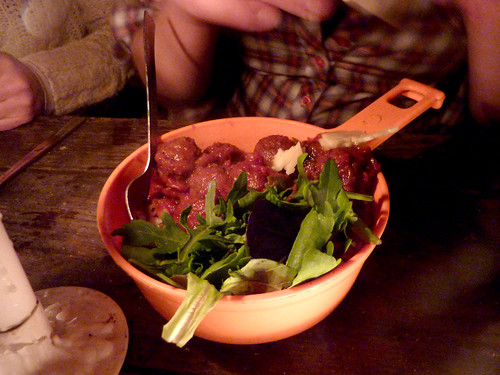
We made our way back to the camp and tucked into a hearty Swedish supper of pickled herring, crisp bread and meatballs.

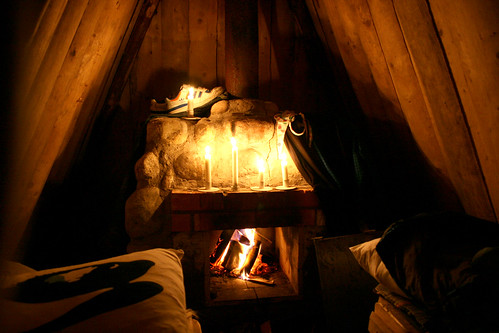
Cabin inside

And then returned to our toasty cabins good night's sleep.

Fire place

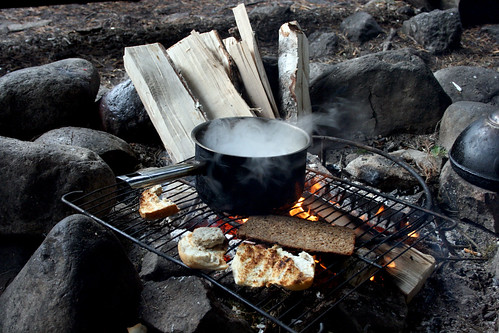
We had a rustic breakfast of eggs, porridge and coffee gathered around yet another fire before heading off for an excursion in search of a moose.

Lychen and moss

But all we seemed to find was acres of lychen...

Loganberry

thousands of lingonberries...

Fly agaric

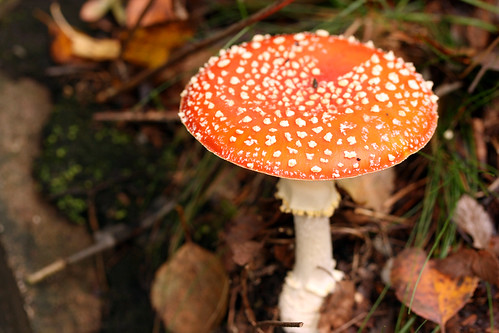
and dangerous mushrooms.

Team shot

But that didn't matter it the slightest. And I can safely say that the four of us had the best weekend we can all remember for a long time.

Kolarbyn is one of the most enchanting places I've ever been to and I can't recommend it to you enough. If you are staying for longer than one night you might want to treat yourself to a wolf howling tour, a beaver trail or a moose safari. But to be honest, just being at one with nature was good enough for us.

Tuesday, 28 September 2010

Spaghetti alla Bottarga

Turquise water and yacht

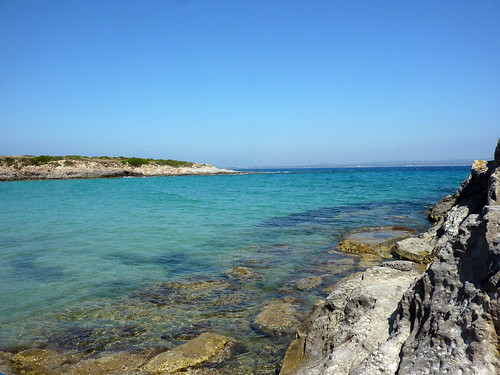
Sardinia’s opal tinted waters that lap against the island’s crinkly coast are awash with bronzed Italian bodies and most excitingly, are wriggling with grey mullet. The history of Sardinia, the Mediterranean and these wriggling mullet is so intertwined that you could write a compelling anthropological thesis about their relationship that would reveal the island’s true character.

Sardinia’s location makes the island a sponge for outside influences. Over the centuries Sardinia has been invaded by the Vandals, the Byzantines, the Ostrogoths and the maritime republics of Genoa and Pisa as well as being inundated by Arab raids. It’s this influx of external influences that makes Sardinia’s food culture so interesting. A quick look at the culinary palimpsest shows what a strong influence Arab culture has had on Sardinia with the legacy of fregola and most interestingly, bottarga.

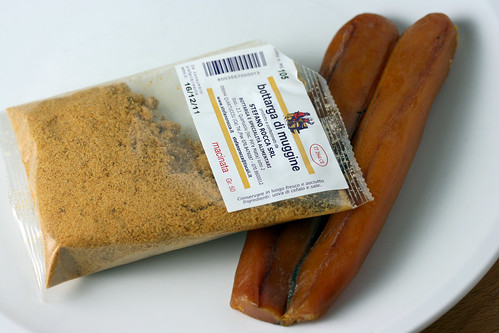
Bottarga (AKA Sardinian Caviar) is the preserved roe sac from grey mullet and tastes deeply savoury, super salty and very grown up. Just imagine a firmer, nuttier version of an anchovy. It is made by salting a mullet roe sac and then pressing it between two pieces of wood and air-drying it. When cured it is then covered in a layer of beeswax and sold for an extortionate price in flash delis all over the world. It gets its name from the Arabic batarekh and is found in various guises across the Middle East.

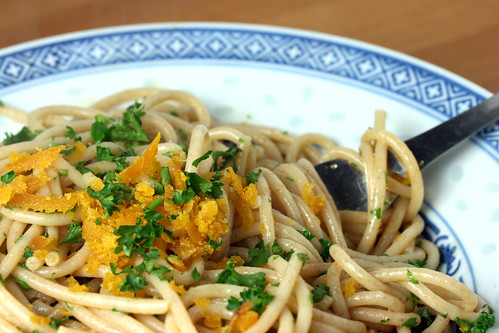
Like all seafood and Italian food it is at its best at its most simple. Just grate it onto a bowl of pasta that’s been doused in garlic infused-olive-oil and lemon zest and shower it in parsley and you will be eating the very essence of Sardinia.

Costa del Sud view 2

View across the bay

Beach babba

View from our flat

Spaghetti alla bottarga 2

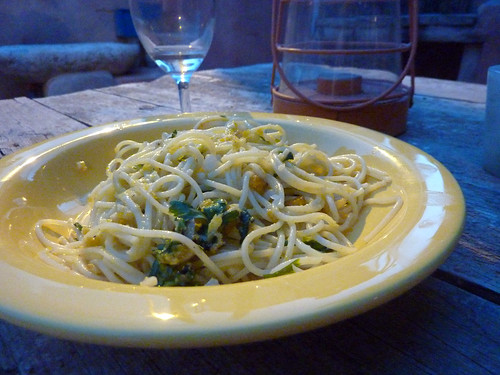
We had a go at cooking an improvised version of spaghetti alla bottarga in our outdoor kitchen at Casa Teulada whilst we were in Sardinia and loved it so much that I made it my mission to recreate it properly back in my kitchen in Sweden. With a recipe from Mario Batali as a guide I put my waxy block of fishy gold to good use.

Bottarga


Ingredients:


Top quality spaghetti
Bottarga
Italian parsley
Olive oil
2 cloves of garlic
1 lemon
Chilli flakes
Salt and pepper

Method:

Boil the pasta in salted water.

Meanwhile gently heat an indecent glug of olive oil in a cast iron pan and add the thinly sliced garlic and chilli flakes. You just want the garlic to warm through and lose its raw edge which will take no more than a few minutes. If you've got some bottarga powder as well as the roe, sprinkle some into the oil for a deeper flavour.

Then when the pasta is cooked use a claw and add the pasta to the garlicky oil. Flick in some of the magical pasta water and toss. Then serve in a bowl and sprinkle with finely chopped parsley, lemon zest and then triumphantly grate over a generous amount of bottarga. Make haste and serve pronto.

Spaghetti alla bottarga 2

Washed down with an icy bottle of Vermentino, each forkful transports you back to the warm, breezy shores of Sardinia.

This post has been entered into the Grantourismo HomeAway Holiday-Rentals travel blogging competition which you can read about here and on www.homeaway.co.uk


For more information about bottarga and Sardinia have a look at these sites:


Gastroanthropology on bottarga
Granturismo themselves on the delicacies of Sardinia and even more bizarrely their account of staying in our apartment!
Practically Edible on Bottarga
One Bite on Bottarga

Sunday, 26 September 2010

Salmon with Fennel Remoulade

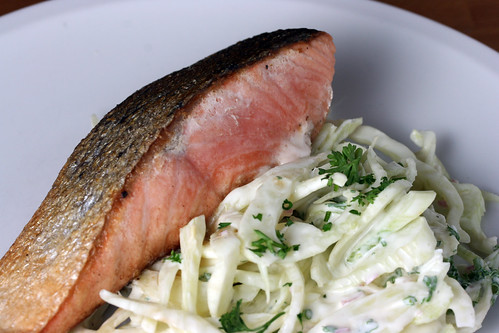
Salmon with fennel remoulade 2

I’ve got a confession to make. I’ve become addicted to fennel. In my defence, I am genetically pre-disposed to the stuff and I suspect that my mother has an even bigger soft spot for it. I love the texture, the sweetness and its grown up aniseed flavour. Whether it’s grilled, cured, pureed or raw, it never fails to add an elegant extra dimension to any dish. As a result there is normally a fennel bulb standing on duty in my fridge waiting to be called into action.

I opened up my trusty Flavour Thesaurus and flicked straight to the “Anise” section. In the introduction Nicki Segnit claims that anise gets on “famously with seafood” which triggered a memory of Heston Blumenthal’s salmon with liquorice gel and also of a stunning fish soup with a fennel backnote that Cowie and I had on a remote Swedish island. Nicki speculates that the sweetness and refreshing quality of fennel makes it the perfect foil for a fatty fish such as salmon. So I thawed a salmon fillet before work and played with the idea of a fennel remoulade during my lunch break (having been inspired by this and this). But the idea of a rich mayonnaise base didn’t seem right, so I switched it to crème fraiche and added some capers for a spritz of salinity.

Ingredients:


1 salmon fillet
Olive oil
Butter
Salt and pepper
1 fennel bulb
2 tablespoons of crème fraiche
1 teaspoon of capers
Handful of finely chopped parsley
Juice of half a lemon
1 teaspoon of whole grain mustard
1 finely chopped shallot

Method:

Chop the fennel as finely as possible and discard the tough central spine and put in a non reactive bowl. Immediately cover in lemon juice. Add the chopped shallot, capers, and mustard and then add the crème fraiche. Stir so it is all coated and then place in the fridge whilst you cook the salmon.

You can sear, poach or grill the salmon depending on whether you trust your grill, have an issue with making the house smell of fish, like crispy skin or are on a diet. Given my love of crunchy skin and the temperamental nature of my grill I went for the frying option. It also helps that I live on my own! Sear the salmon, skin side down, in a hot pan for a few minutes until the skin is crispy. Turn the heat down and flip the salmon. Add a knob of butter and cook until its done to your preference.

Personally I like to dice with death by cooking it so the middle is only just warm and a vibrant sunset pink. But it’s up to you. You can either be brave and risk a dose of botulism or be a cowardly woos living a life punctuated by regret, greyness and never ending remorse.

Remove the fennel mixture from the fridge and add the chopped parsley and season to taste. You won’t need as much salt as you think because of the salinity of the capers.

Salmon with fennel remoulade

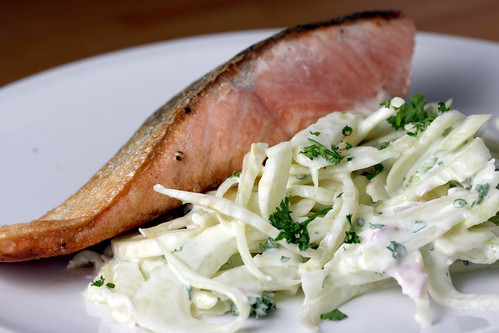
I wolfed this down watching an old episode of Spooks with a glass of metallic Muscadet and went to bed looking forward to a second sitting for lunch at work, but with less wine! The salmon was juicy, rare and blessed with skin that was so crisp and salty that you could have persuaded a blind folded man that it was pork crackling, whilst the fennel remoulade was restrained, crunchy and healthy to boot. I imagine it would go very well with left over roast chicken, crab or would be great as part of a picnic instead of icky coleslaw.

Further reading:


The Flavour Thesaurus by Nicki Segnit
Fennel Remoulade from Nick Nairn
Fennel Remoulade from Cook Almost Anything

Wednesday, 22 September 2010

Celery and Cauliflower Soup with Honey Glazed Walnut Croutons

Celery and cauliflower soup with walnut croutons

The Flavour Thesaurus is fast becoming my favourite cookery book. When I looked in my fridge and saw half a head of celery and a cauliflower I was about as inspired as a fax machine. Feeling hungry and glum I flicked through Niki Segnit’s book and my mind itched with possibilities. Reading the book was like smoking a joint. It helped to connect disparate ideas. The last entry in the cauliflower section suggested an affinity with walnuts. Inspired by this I thought of Waldorf Salads and dived into the section that explains the affinity between walnuts and celery and got very excited when I saw that walnuts have a “magical” relationship with chicken stock.

So it all became very simple. I had no option. I had to make cauliflower and celery soup with a chicken stock base and walnut croutons.

Ingredients:

1 head of cauliflower
1 head of celery chopped
1 finely chopped onion
1 clove of garlic
2 litres of chicken stock
4 small potatoes
Olive oil
Butter
Cream
Salt
Pepper
Skinned and chopped walnuts
Honey

Method:

Saute the onion until beginning to soften in olive oil and butter. Add the celery and garlic and continue cooking for a few minutes. Then add the cauliflower and potatoes and fill the pan with chicken stock.

Simmer for 15 minutes or until the vegetables are tender. Liquidise and season with salt and pepper and return to the pan to reduce to your desired consistency.

Whilst reducing, heat a frying pan and add the walnuts. Then when they are getting toasty spoon over some runny honey. The nuts should become sticky and crunchy.

Serve the soup with a dash of cream and a topping of walnut croutons. What it lacks in vivid colours it makes up for super savoury flavours. Without the sweet and crispy walnuts this would have been a shadow - they added texture, sweetness and a golden thread to marry the celery and cauliflower together.

Thursday, 16 September 2010

Turkey Meatballs with Mushroom Sauce

Turkey meatball with wheat and mushroom strog

A trip to the supermarket isn’t complete without remortgaging your house. Whereas in the UK, the fierce competition between the supermarkets means you get inundated with special offers, 3 for 2s, bogofs and reap the rewards from loyalty schemes, Sweden just plucks a price for each item out of thin air and then doubles it. And then adds a tonne of tax. For the first month or so I was overwhelmed by the language barrier and a bit naïve about the exchange rate with the result that each bag of food seemed to cost around 30 pounds. Since then, I’ve been far more careful and have cut out expensive items such as meat from my shopping list and instead filled my basket with vegetables and keep things interesting by regularly visiting the fish monger. As a result my bags are now weighing in at 20 pounds and I am feeling a lot healthier to boot.

Whilst exploring the exotic frozen meet section in my local supermarket, amongst the crocodile meat, marrow bones and deer blood, I came across a rather boring, but cheap, giant frozen turkey breast and started thinking of ways to pep up this dull lump of protein.

The first night I lobbed off a couple of chunks and poached them in a stock laced with cardamom, cinnamon and coriander and ladled over a reduced sauce that was supposed to be savoury but turned into butterscotch. Whilst it filled a hole for dinner and lunch the next day, let’s just say it barely deserved the 63 words I’ve just given it.

The worst thing about the meat was the texture. With so little fat it was dry and very tasteless. So the only solution was to mince it and turn this mound of inert poultry into super tasty meatballs. This is an adaptation of a great recipe from Anne’s Food which uses either pork or beef. But I’ve used turkey instead.

Ingredients:

Meatballs:

1 whole turkey breast weighing around a kilo
1 finely sliced onion
1 clove of garlic
White pepper
Salt
Handful of cardamom pods
Sprinkling of cinnamon powder
Sprinkling of all spice
Some oats/breadcrumbs to balance the moisture – use your judgement
1 egg

Sauce:

A dozen sliced button mushrooms
1 shallot
1 clove of garlic
2 tablespoons of crème fraiche
Thyme
Tarragon
Butter
Olive Oil
Salt and pepper

Whole wheat

Method:

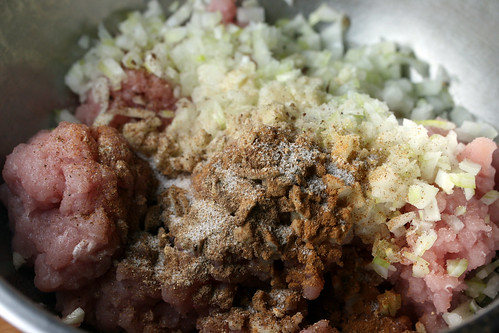
Turkey meatball mix

Mince your turkey and add everything in the meatballs ingredients list. Hold back a bit on the spices and make a test meatball which you should fry in a bit of oil. It should cook in about 5-8 minutes. Let it cool and test for seasoning and spicing. Adjust as necessary remembering that you can always add more, but it’s harder to take away!

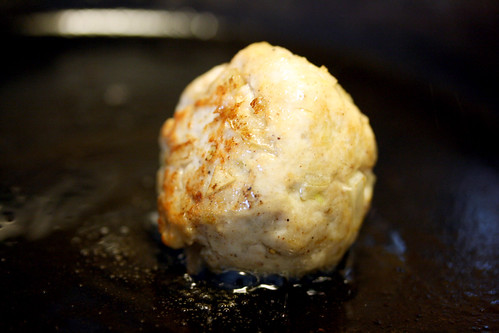
Turkey meatball sizzling

Form into balls about the size of a golf ball and fry in batches to brown. Transfer to a roasting pan cook in a medium-low oven whilst you plough on with the other aspects.

Boil the wheat and drain, but reserve the starchy water. Keep the wheat warm.

Sautee the mushrooms in butter and oil and season with salt which will draw the moisture out. They should start to turn brown. Then add the onions and garlic and cook until soft but not brown. Then pour in about 300ml of the starchy wheat water and it should cause quite a commotion in the pan. Add a dash of liquid chicken stock and reduce. Add some crème fraiche, tarragon, thyme and seasoning to the sauce which should become quite stroganoffy.

Turkey meatball with wheat and mushroom strog top

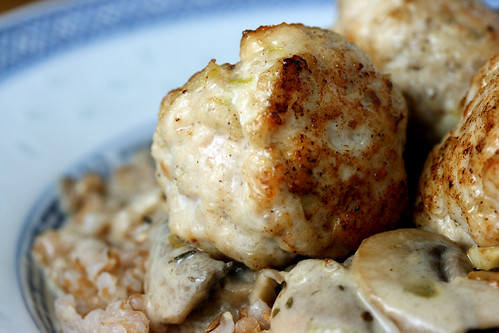
Serve the meatballs on a bed of wheat and topped with the mushroom sauce. What is lacks in colour it makes up for in rich, autumnal flavours.

This recipe made around 20 meatballs which was enough for 5 meals. Which made it incredibly good value. The warming spicing completely transformed the bland turkey and leant itself to being paired with quinoa, cous cous or fregula and plenty of hot sauce.

After dipping my toe into the controversial world of Swedish meatballs, I’m looking forward to giving the proper versions a go next. If you’ve got a great recipe for Swedish meatballs that you can share with me I’d love to give it a go.

Tuesday, 14 September 2010

Swedish Mushroom Adventures

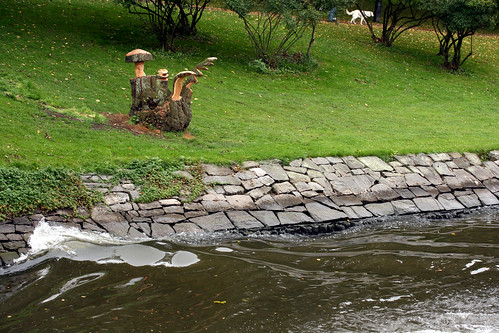
Early September in Sweden is an enchanting time of year. The damp air and moist forests feel ripe with autumnal life and even the grassy areas in town are sprouting mushrooms. Even if they have been carved out of tree stumps.

Mushroom carving

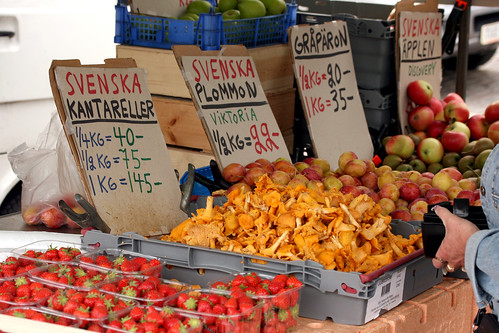
With the sun being slow to make its mind up as it politely debated with the clouds about who should bat first, I went for a run and landed up at the Saluhallen where I almost inevitably was drawn towards a man selling chanterelles (Kantareller) for a pittance. I snaffled a bagful and grinned as I felt their weight almost drop through the bottom of the paper bag and the change jangle in my running shorts' pocket.

Kantareller market

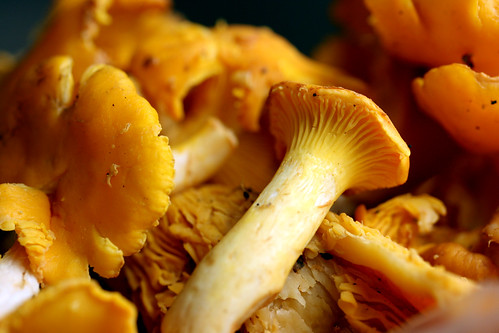
Chanterelles close

Chanterelles on toast

With my golden cargo and a loaf of honey rye sourdough I made my sweaty way home and cooked the most perfect breakfast of sautéed chanterelles on toasted sourdough topped with some creme fraiche and washed down with the best part of a whole pot of percolator coffee. All I needed to make it extra special was Cowie and a copy of the Guardian.

My weekend mushroom adventures continued on Sunday with a trip to the forest. With Alexandra's mushrooming knowledge and the advice from a day of foraging with John Wright of River Cottage HQ ringing in my ears and memories of playing mushroom roulette in Richmond Park we fearlessly tackled the mozzies and got stuck in. We found a wealth of half nibbled mushrooms snuggling into the light, sandy soil, sheltering beneath the branches of pine and birch trees.

I’m not sure what they all are, but where I’ve got an inkling I’ve included a caption. If you know what they are please let me know in a comment.

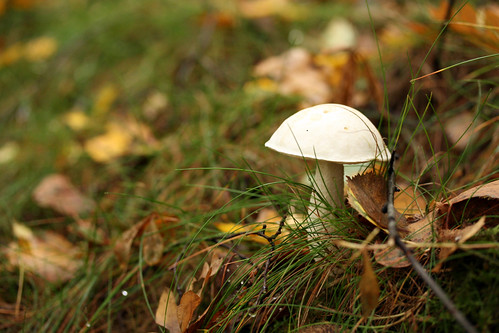
White mushroom woods

No idea what this one is. But it looked mean and evil.

Massive mushroom side

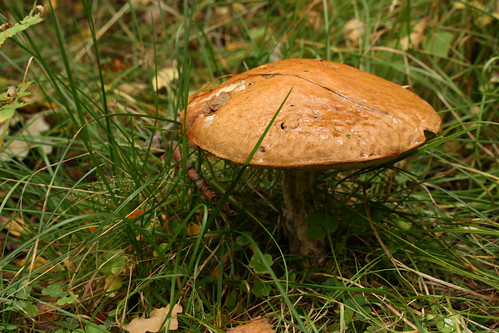
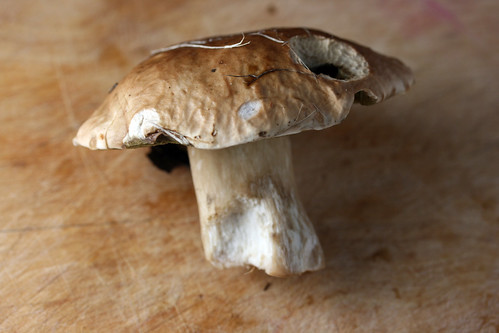
This monster, we think is ideal for eating. It’s either a cep, or another sort of bolete. It was just a shame that the slugs and maggots had got there first.

Fly agaric

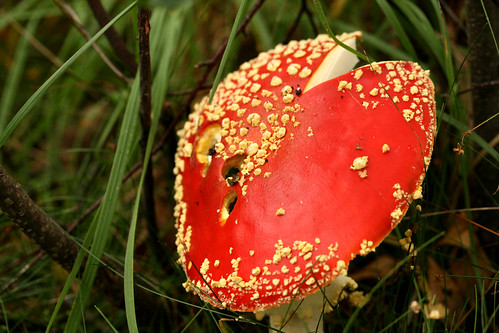
And we saw these Fly Agaric by the dozen, as they flamboyantly lined the paths.

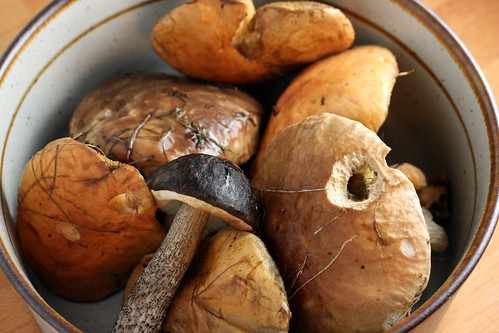
Mushroom collection

I returned home with an impressive clutch of well pored mushrooms which all seemed like they had edible potential, with the ominous exception of the black capped, long stemmed, example which resembled a grim reaper.

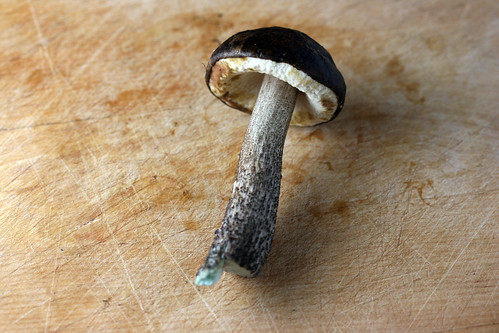
Mushroom 1 side

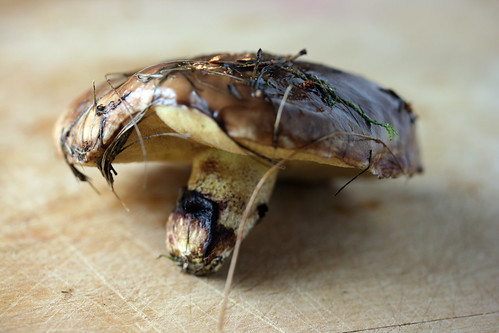
We were very worried about this one. It looked particularly evil.

Murshroom 5 side by side

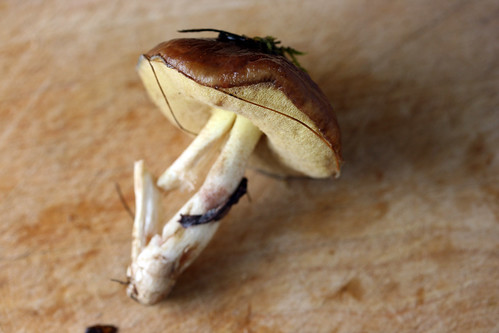
These are called Slippery Jacks which are covered in a slimy cap which can cause indigestion. If you clean the cap the mushrooms themselves are rather good apparently. But their name is enough to put anyone off!

Mushroom 4 side

This one, I think, is a cep, which is called a Carl Johan in Sweden, and judging from the amount of holes must have been very tasty.

Mushroom 3 side

Mushroom 2 side

These two smelled good and when I took a small nibble didn’t taste bitter, but instead, rather impressive. And given that friends in the office and a few online experts suggested these would make for very good eating I plucked up the confidence to tuck in.

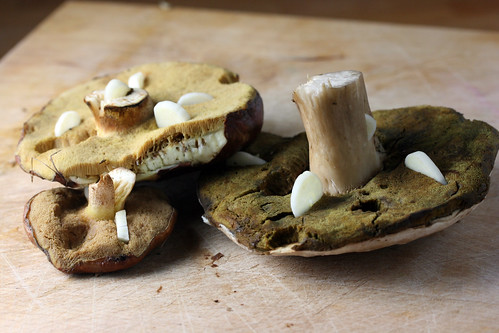
I decided to follow a recipe from Mark Hix’s new book “Hix Oyster and Chop House” and simply studded the ceps with slithers of garlic, coated them in butter and seasoning and then roasted them for 15 minutes before sprinkling with parsley and nervously tucking in.

Garlic studded mushrooms

Pores

Garlic studded roasted mushrooms

They were absolutely delicious. Soft, tender and buttery and without question, the most mushroomy thing I’ve ever eaten. I am sure they tasted even better because there was a chance I’d identified them wrong and there was a vague possibility that this could be my last meal. If I suddenly drop down dead, please come and find me armed with whatever anti-toxins I require!

Further reading:

Funghi Forays - sign up for their excellent newsletters
Carl Johan on Wikipedia
The Good Food Mood Blog on chanterelles on toast
Beginners' guide to picking chanterelles in Gothenburg Daily newspaper

LinkWithin

Blog Widget by LinkWithin