Showing posts with label healthy. Show all posts

Tuesday, 8 March 2011

De-vine Kåldolmar

Since moving to Gothenburg I’ve tried to learn about Swedish culture and language through the medium of food. It seems to be the best way to uncover the truths about what makes this country tick. The more you read and eat the more you encounter the paradoxes and culinary riddles that slice through Swedish culture. My latest lesson involves 18th century battles, a town named Bender, a king called Karl and the Swedification of the classic Turkish dish of stuffed vine leaves into cabbagey kåldolmar.

The story of kåldolmar dates back to the early 1700s and offers a glimpse of Sweden’s once mighty past and tetchy relationship with its bellicose northern European neighbours. Apparently, King Karl XII, after losing the decisive Battle of Poltava in 1709 to Russia and their Polish and Norwegian allies, went into exile in a Turkish town called Bender. Whilst he was there, living off the generosity of his Ottoman allies, he spied on their warships and returned home to Sweden several years later with blueprints for a rejuvenated navy and more importantly a taste for dolmas.


Battle of Poltava (1709) painted by Denis Martens the Younger in 1726

The linguists amongst you will know that “dolma” means “stuffed thing” in Turkish which highlights the versatility of this dish. You’ll find different varieties of dolma across the old Ottoman Empire with fillings ranging from ground meat, to aubergine, courgette, peppers and rice, but typically the shell is a vine leaf. It’s hard to know which particularly style of dolma was Karl’s favourite, but from my experience of Swedes I’d guess that it was at the meatier end of the spectrum.

Saffron Dolmas & Tahini

Dolmas from Norwichnuts on Flickr

In the chillier climes of Sweden, vine leaves were hard to come by, but Karl and his followers still hankered after the exotic taste of dolmas. So being the creative and practical nation that they are, the Swedes adapted the dish to use cabbage instead of vine leaves as a sturdy casing for the minced pork. They also switched carbs away from the rice you’ll find inside dolmas and now serve these meaty parcels with boiled potatoes, gravy and lingonberry jelly. For a decent recipe for classic Swedish Kåldolmar look no further than Annes Food.

One of my frustrations since moving across the North Sea is that the trend for smuggling enchanting tastes back from the Middle East, started by King Karl, doesn’t seem to have continued, despite the large and vibrant Middle Eastern population in Sweden. Fine, you can get donner kebab on your pizza, and plenty of curious spies in your meatballs, but so far, I haven’t found anywhere that expertly grills spiced meat over charcoals like Antepliler in Manor Park or any of the middle eastern delights you’ll find on the Edgware Road or Yottam Ottolenghi’s delis and books. Where’s the Turkish, Iranian and Iraqi version of Tayyabs in Gothenburg?

One of the most interesting recipes in the Nordic Diet cookbook sees the classic, meaty, kåldolmar given a healthy, fishy update. Trina Hahnneman kicks out the pork and replaces it with plaice, mustard, leeks and courgettes.

I gave them a twist of my own and have found the process of wrapping fish in blanched cabbage to be a very therapeutic process. The technique is pretty simple and is the basis for a wide range of healthy and delicious variations.
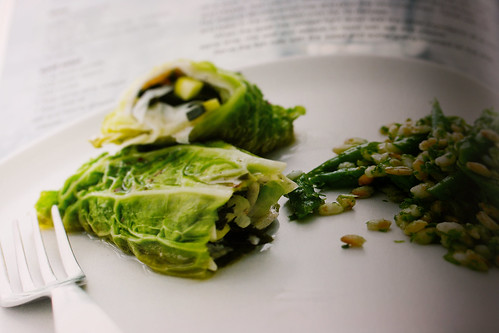
Nordic Diet-7

Smoked Mackerel Kåldolmar with Pototto (Potato Risotto)

Inspired by Marcus Sameulsson's excellent Aquavit cookbook and Trina Hahnemann's Nordic Diet

Serves 2

4 cabbage leaves
4 smoked mackerel fillets
Dijon mustard
400 grams of waxy potatoes – diced into 8mm cubes
Vegetable stock
Horseradish
Dill
1 onion
Olive oil
Butter
2 glasses of white wine
Salt and pepper

Blanch four cabbage leaves in salted water and refresh in running cold water. Allow to cool and then remove the tough stem which acts as a structural spine. This will make the leaves more foldable.

Place a mackerel fillet in the centre of each leaf and smear with a dollop of mustard and anoint with lemon zest and ground black pepper. Then wrap them up like you would with a burrito. For guidance take a look at Cheryl Marie’s blog.

Finely dice the onion and sweat in olive oil. Then add in the 8mm cubes of potato. Add a glass of white wine and then ladle in stock and stir, as you would do with a risotto. It won’t take very long to cook so keep an eye on it. Add some thyme or tarragon as you go depending on what’s to hand and what you feel like. Beat in some butter at the end and keep warm.

Place the cabbage parcels in a baking dish and pour in a glass of white wine. Cook for 10 minutes. And then serve on top of a bed of posotto with plenty of seasoning, a sprinkling of grated horseradish and a scattering of dill.
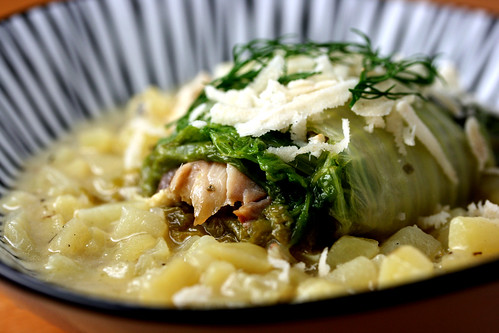
Mackerel cabbage parcel

Fish parcel wrapped in cabbage from Trina Hahnneman’s Nordic Diet

Serves 2

4 cabbage leaves
400g of white fish fillets
1 courgette
1 leek
1 red pepper
Olive oil
Lemon zest
Salt and pepper
1 glass of white wine

Blanch and refresh the cabbage leaves in the same manner as the first recipe. Place a 100g piece of fish in each parcel and then add a spoonful of diced courgette, red pepper and leek. Then add a dab of butter, a dusting of lemon zest and plenty of seasoning. Then wrap them up and place them in a baking dish with a glug of olive oil and a glass of white wine.
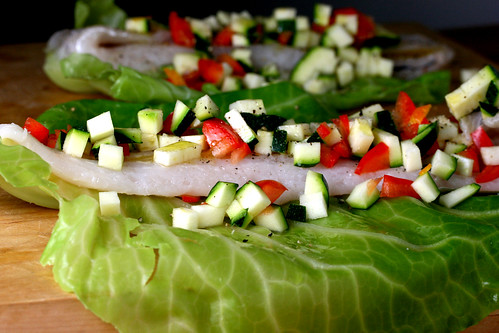
Hake wrapped in cabbage

Bake for 12 minutes until the fish is just done and serve. I partnered it with fregola, roast peppers and tomatoes which gave a sweet, red counterpoint to the savoury greens.

Hake wrapped in cabbage 2

It works just as well with minced fish and langoustine tails. When I next have a load of langoustine or crayfish, I’ll formalise it into a recipe. Roll on "Kåldolmens dag" which celebrates the Cabbage Roll on 30 November.

Thursday, 10 February 2011

Swaesar Salad™

Swaesar Salad-2

One of the reasons Brits get on so well with Gothenburgers is a shared love of the risible pun. Folk from Gothenburg will chortle with rosy cheeks and mischievous grins when they slip a cheeky double entendre into a punishing business meeting. It’s one of Gothenburg’s defining characteristics and sets it apart (so I am told by locals) from the rest of straight laced Sweden.

Whenever cartoons call for a comic character they always have a Gothenburg accent, whilst the posh protagonist tends to be from Stockholm and the rural dim wit inevitably hails from southern Sweden’s farming region. It seems like every country has their own version of the Englishman, the Irishman and the Scotsman joke.

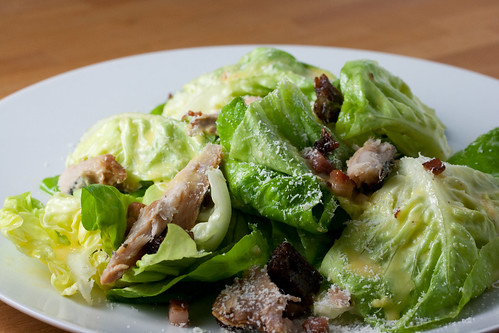
Another of Gothenburg’s defining characteristics is a love of herring which is called “sill” on the West Coast and “strömming” on Stockholm’s East Coast. So it’s quite fitting that one evening after a long day at work I had the “sill-y” idea of creating a Gothenburg version of the Caesar salad which switched the increasingly overfished anchovy with plentiful herring. To my glee it worked far better than I had imagined and I’ve got a feeling that you could bottle this stuff and sell it up and down the West Coast to pun loving Swedes. So here is my Swedish Caesar Salad – AKA The Swaesar Salad™. I adapted a herring themed caesar salad recipe on Canada’s Food Network website.

Ingredients

Dressing

2 table spoons of minced pickled herring without the liquid
2 cloves of garlic
2 egg yolks
Juice from half a lemon
100ml of sunflower oil
50g of hard Swedish ewe’s cheese – like Pecorino
Salt
Pepper

Salad

1 Iceberg lettuce
100g of lardons
100g of böckling (hot smoked herring which isn’t unlike kippers or more accurately bloaters)
2 slices of pumpernickel cut into small squares
Swedish sheep’s cheese or alternatively Pecorino or Parmesan

Method

Begin by whisking the egg yolks with the garlic, herring and lemon. Then add the salt and pepper. Then, as if making mayonnaise pour in the oil, in a thin, slow stream. Whisk as you go until it thickens. Taste for seasoning. It will be quite salty from the herring so don’t go mad on the white stuff. Plus you are going to add salty bacon and cheese. Put the dressing in the fridge and then when you are feeling hungry assemble your salad.

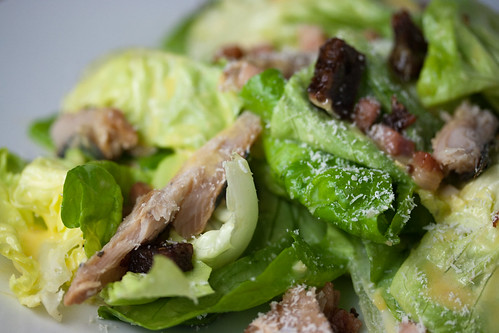
To do this cut the flappy leaves away from the lettuce and concentrate on the crunchy leaves in the centre. Give them a wash and then fry your lardons in a heavy bottomed pan along with the cubes of pumpernickel. This won’t take very long. The chocolaty brown bread will add some sweetness and crunch to the salad and give it a much more interesting flavour than the normal white bread croutons.

Dress the leaves with the Swaesar™ sauce in a large bowl and then grate the hard sheep’s cheese on top. If you can’t find a suitable Swedish cheese then Parmesan or Pecorino will do. Add the lardons, pumpernickel and chunks of bokling and tuck in.

It’s not very Swedish to speak about yourself let alone your own achievements, but I’m very proud to say that this is one of my favourite creations to date. The sauce tasted authentically like Caesar dressing but with a noticeable Swedish flavour of subtle herring which arguably makes it even more savoury than the classic dish. The pumpernickel along with the lardons does a great job of giving the dish a sweeter note that stands up to the more savoury aspect. The böckling’s smokiness then gives the whole plate an extra level of sophistication.

Swaesar Salad-7

Sunday, 23 January 2011

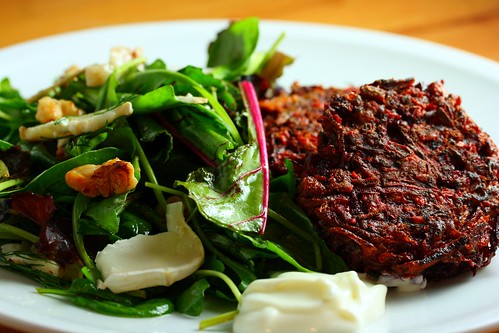
Nordic Beetroot Burgers with Goats’ Cheese and Walnut Salad

Nordic Diet-9

I’ve developed a bit of a beetroot fetish since moving to Sweden. I find it’s always on my shopping list and seems to leave its scarlet mark on almost every dish I cook. I love the muddy flavour and mellow sweetness and would be very sad if there was ever a world shortage of beetroot. One of the reasons I like it so much now is that I used to hate it when I was younger. I’ve got bitter-sweet memories of hating the overly pickled taste of my grandmother’s beetroot but loved the fact that it came, covered in sandy soil, from their kitchen garden. Now, whenever I eat beetroot I remember my grandparents and their staggering vegetable patch and hanker after having one of my own one day.

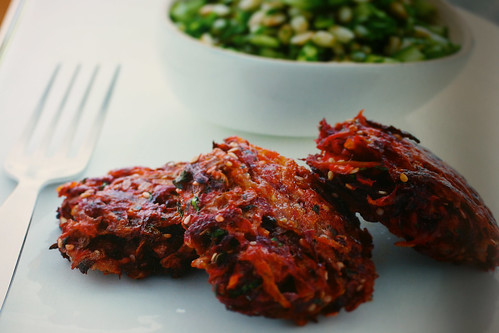
Veggie burgers have a very bad press. They normally fall apart and taste more of old oil than of anything pleasant. It strikes me as a shame to mush up lots of lovely vegetables and then muddy the fresh flavours in search of the juicy glory of a really meaty burger. But the beauty of beetroot burgers is that they are singularly focused on one vegetable that responds very well to being “burgered up”. I guess it’s a combination of their vivid flavour and colour, but also the fact that beetroot’s starches caramelise nicely when seared, much like meat does.

This recipe for the burgers is from Trina Hahnemann, but without any ghastly rapeseed oil and rather than a barley salad is paired with a goats’ cheese and walnut salad instead. My only question is what are the mystery seeds in the photo from the book at the top of this post because they don’t appear in the recipe?

Ingredients:

For the beetroot burgers:

500g red beetroot, grated
100ml porridge oats
3 eggs
1 shallot, very finely chopped
4 tbsp finely chopped dill
2 tbsp finely chopped thyme
2 tbsp finely chopped parsley
Salt and freshly ground pepper
1 tbsp vegetable oil, for frying
Crème fraiche and dill dollop

For the salad:

Mixed leaf salad including beetroot tops
Goats’ cheese
Toasted walnuts
Honey, mustard, olive oil and balsamic vinegar to dress

Method:

Peel the beetroot and then finely grate. If you have a Magimix I’d suggest you use it as it saves a lot of time.

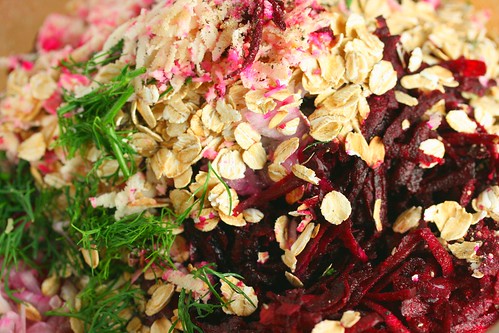
Mix the grated beetroot with the eggs, porridge oats, herbs, seasoning and shallots. Get your hands dirty and work it all together. Then chill in the fridge for an hour or so. This is important as it allows the mixture to mingle and means that the burgers have more structural integrity.

Grated beetroot

Form the burgers into patties and fry until they are crisp on the outside and then finish in the oven for 20 minutes.

Frying burger

Assemble the salad, and whisk up the dressing whilst the burgers are cooking through and serve with a dollop of dill crème fraiche.

Beetroot burgers with salad

I’ve got a feeling they would also work well as “beet-balls” but I’m not sure yet what sauce to slosh on top of them. If you’ve got any ideas, let me know.

Delicious. Healthy. And different. Well done, again, to The Nordic Diet.

This post is part of little series dedicated to The Nordic Diet cookbook which was sent to me by Quadrille.

Sunday, 9 January 2011

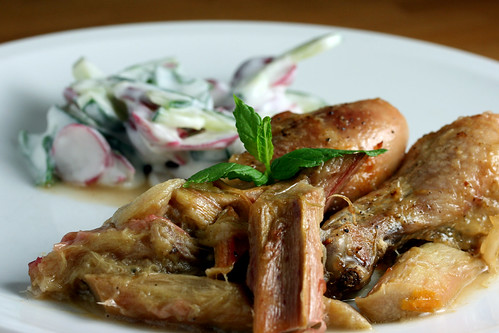
Chicken with Baked Rhubarb and Cucumber and Radish Salad

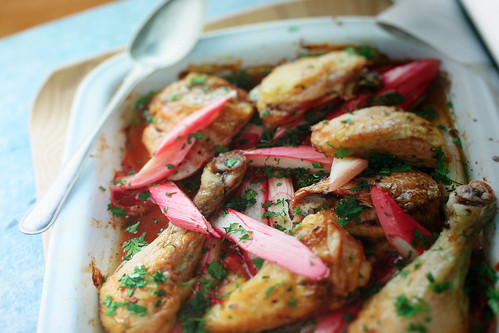
Chicken with rhubarb

I love the way rhubarb unfurls out of the spring soil to display a Mateus flushed shard of swollen stem and tough, poisonous leaves. I love the ritual of forcing rhubarb in darkened conditions to beat your neighbours to serving the first rhubarb of the season. I think back longingly of my grandmother’s hit or miss rhubarb fool that was always delicious, if a little stringy. And will almost always order a rhubarb dessert if I see it on the menu. Unfortunately, we don’t eat much rhubarb as a family because the acid gives us all joint ache. But it’s worth the discomfort.

Up until now I’d not thought too much about rhubarb (shocking I know). But the more I read, the more interesting it becomes. For starters who knew that rhubarb is actually a vegetable and is in the Rheum family and is therefore closely related to sorrel? Or that in America it is legally a fruit because a judge said so in 1947? Or that it originated in Asia and has only been cultivated in the western world for the last two or three hundred years? Or that the roots can be dried and used as a tonic to cure constipation and circulatory issues? Or, more importantly, that this enigmatic stem is amazing with chicken?

Trina Hahnemann’s recipe for “chicken with baked rhubarb and cucumber -radish salad” immediately stood out from her Nordic Diet cookbook, partly because of the stunning photograph but more significantly because of its weirdness.

Nordic Diet-4

But when you think about it, the idea makes a lot of sense. Chicken is great with lemon and other acid driven accompaniments, so long as it is balanced by something sweet to take the tartness away.

Ingredients

Chicken legs
2 stalks of rhubarb
A few spoons of honey (she uses raw sugar – but I prefer honey)
Salt
Pepper
1 Cucumber
10 Radishes
Yoghurt (preferably goats’)
1 clove of garlic
Chopped mint

Method

Season the chicken legs and roast for 30 minutes. Meanwhile chop the rhubarb into 2 inch long batons and lightly coat in honey. After 30 minutes add the rhubarb and cook for a further 15 minutes.

To make the salad finely slice the radishes and de-seed, then finely slice the cucumber. Mix with just enough yoghurt, a finely minced clove of garlic and the chopped mint. Season.

Serve the chicken with the salad and garnish with a sprig of mint. It’s a great way to use up a glut of rhubarb in late spring or as a way of causing a bit of Steingarten-esque debate about the differences between fruit and vegetables. I think it is a fantastic idea and am looking forward to experimenting further. I wonder what a rhubarb-ified version of honey lemon chicken would be like?

Further reading

Other rhubarb chicken recipes on Rhubarb Compendium including roast chicken stuffed with rhubarb and the psychopathically named chicken smothered in rhubarb

Rhubarb as an accompaniment to fish in the Independent

Mackerel with roasted rhubarb from Nigel Slater


Savoury recipes for rhubarb on Chowhound


Jeffrey Steingarten’s Man Who Ate Everything (including a spellbinding chapter called Ripeness is All about the differences between fruit and vegetables)

Trina Hahnemann’s – The Nordic Diet on Amazon


The science of rhubarb poisoning


This post is part of little series dedicated to The Nordic Diet cookbook which was sent to me by Quadrille.

Wednesday, 3 November 2010

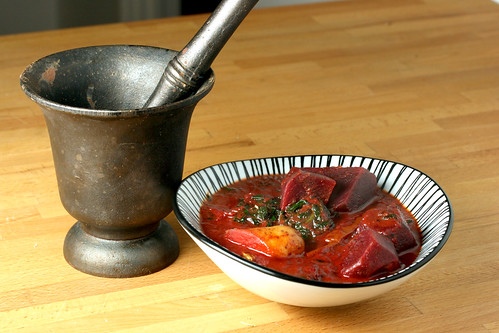
Beetroot Curry

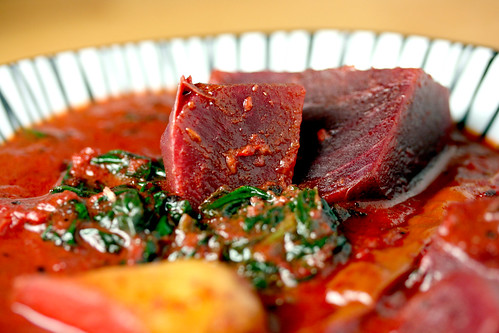
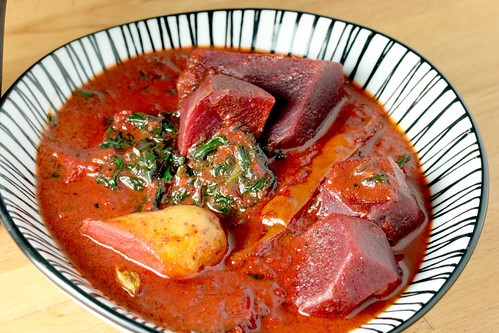
Beetroot curry

Has Browners gone completely insane? Beetroot curry sounds repulsive. He must have gone native. What’s next, pickled herring soufflé? A dill and walnut chocolate cake? Lingonberry scrambled eggs? But fear not. Beetroot curry is actually rather good. And fabulous to look at.

As you may have noticed, I’ve become rather attached to beetroot since moving to Sweden. It’s all part of my effort to eat more vegetables, to cut down on expensive meat and to become a bit healthier. And it turns out that beetroot are a blessing. They’re tasty, healthy, filling and hold their own against robust flavours. But would beetroot be able to cope with curry?

Chicken curry chef

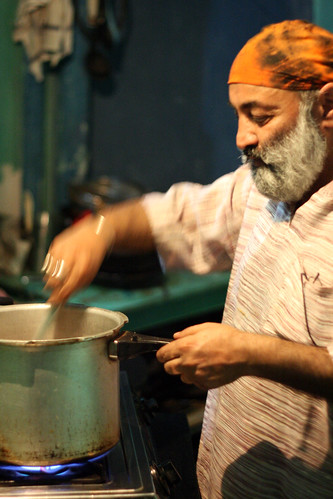
When Cowie and I were in India this time two years ago, we had a couple of cooking lessons from some of our hosts. I’ll never forget this chap at the Villa Rivercat in Goa patiently whipping up an incredible chicken curry with spices that were so expressive they were like Eddie Murphy after a dose of amphetamines. We both came back from India feeling incredibly healthy having eaten mainly vegetables and fish throughout our trip.

Inspired by thoughts of India I hatched a plan to create the reddest curry every seen and set off in search of spices. The Curry House, in the quaint district of Haga, has every spice known to mankind. And then some. They even sell bizarre things like black feathers, rhubarb root and lots of exotic medicines. It’s a bit like the market in Munnar, but less crazy.

Umbrella market man

Armed with fennel seeds, cumin, star anise, cardamom, dried red chillies, mustard seeds, turmeric and a massive bag of orange lentils I aromatically waddled back to my flat to do battle with the beetroot.

Ingredients:


10 beetroot
10 small potatoes
1 bag of fresh spinach (or can be frozen)
1 can of coconut milk
6 tomatoes
2 onions
2 cloves of garlic
Chicken/vegetable stock
2 thumbs of ginger
1 dessert spoon of cumin seeds
1 desert spoon of fennel seeds
1 dessert spoon of mustard seeds
1 desert spoon of coriander seeds
10 cardamom pods
5 star anise
2 desert spoons of garam masala
6 dried chillies
Vegetable oil
Coriander leaves
Salt

Method:

Roast all the spices (apart from the garam masala and cardamom) until they are aromatic but not burnt. Then pound to a dust in a pestle and mortar.

Sauté the onion until soft then add the chopped garlic and cook for a few minutes. Then add the grated ginger and breath deeply. A few minutes later throw in all the spices including the garam masala. Allow to mingle and cook for whilst you heat your stock up.

Pour in the hot stock and then add the chopped and peeled beetroot along with the dried chillies and cardamom. You want the liquid to be covering the beetroot.

Allow this to bubble away for about an hour with the lid on – until the beetroot begin to become tender. Then add the halved potatoes and take the lid off so that the liquid reduces. Once the potatoes are becoming tender add the can of coconut milk and 6 finely chopped tomatoes.

Taste for spice levels and seasoning and adjust accordingly with some chopped fresh chillies. At the last minute, stir through some spinach. Sprinkle with chopped coriander and serve.

Beetroot curry close

I had it straight up with no rice, lentils or bread. But I think it would be best served with a chapatti or steaming hot naan. Whilst it might be an assault on the eyeballs it’s a delight to eat.

Beetroot curry top down

I made a large vat of it and lived off it for most of the week. You can add some pork or chicken when you are craving a bit of meat.

Further reading:


Beetroot curry recipe from One Bite at a Time
Beetroot curry recipe from Coffee Muffins

Sunday, 26 September 2010

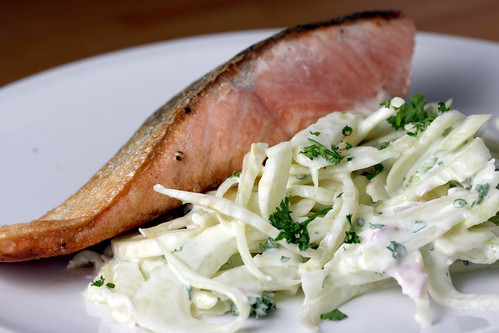
Salmon with Fennel Remoulade

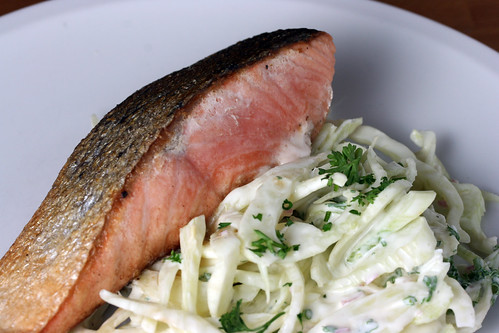
Salmon with fennel remoulade 2

I’ve got a confession to make. I’ve become addicted to fennel. In my defence, I am genetically pre-disposed to the stuff and I suspect that my mother has an even bigger soft spot for it. I love the texture, the sweetness and its grown up aniseed flavour. Whether it’s grilled, cured, pureed or raw, it never fails to add an elegant extra dimension to any dish. As a result there is normally a fennel bulb standing on duty in my fridge waiting to be called into action.

I opened up my trusty Flavour Thesaurus and flicked straight to the “Anise” section. In the introduction Nicki Segnit claims that anise gets on “famously with seafood” which triggered a memory of Heston Blumenthal’s salmon with liquorice gel and also of a stunning fish soup with a fennel backnote that Cowie and I had on a remote Swedish island. Nicki speculates that the sweetness and refreshing quality of fennel makes it the perfect foil for a fatty fish such as salmon. So I thawed a salmon fillet before work and played with the idea of a fennel remoulade during my lunch break (having been inspired by this and this). But the idea of a rich mayonnaise base didn’t seem right, so I switched it to crème fraiche and added some capers for a spritz of salinity.

Ingredients:


1 salmon fillet
Olive oil
Butter
Salt and pepper
1 fennel bulb
2 tablespoons of crème fraiche
1 teaspoon of capers
Handful of finely chopped parsley
Juice of half a lemon
1 teaspoon of whole grain mustard
1 finely chopped shallot

Method:

Chop the fennel as finely as possible and discard the tough central spine and put in a non reactive bowl. Immediately cover in lemon juice. Add the chopped shallot, capers, and mustard and then add the crème fraiche. Stir so it is all coated and then place in the fridge whilst you cook the salmon.

You can sear, poach or grill the salmon depending on whether you trust your grill, have an issue with making the house smell of fish, like crispy skin or are on a diet. Given my love of crunchy skin and the temperamental nature of my grill I went for the frying option. It also helps that I live on my own! Sear the salmon, skin side down, in a hot pan for a few minutes until the skin is crispy. Turn the heat down and flip the salmon. Add a knob of butter and cook until its done to your preference.

Personally I like to dice with death by cooking it so the middle is only just warm and a vibrant sunset pink. But it’s up to you. You can either be brave and risk a dose of botulism or be a cowardly woos living a life punctuated by regret, greyness and never ending remorse.

Remove the fennel mixture from the fridge and add the chopped parsley and season to taste. You won’t need as much salt as you think because of the salinity of the capers.

Salmon with fennel remoulade

I wolfed this down watching an old episode of Spooks with a glass of metallic Muscadet and went to bed looking forward to a second sitting for lunch at work, but with less wine! The salmon was juicy, rare and blessed with skin that was so crisp and salty that you could have persuaded a blind folded man that it was pork crackling, whilst the fennel remoulade was restrained, crunchy and healthy to boot. I imagine it would go very well with left over roast chicken, crab or would be great as part of a picnic instead of icky coleslaw.

Further reading:


The Flavour Thesaurus by Nicki Segnit
Fennel Remoulade from Nick Nairn
Fennel Remoulade from Cook Almost Anything

Wednesday, 22 September 2010

Celery and Cauliflower Soup with Honey Glazed Walnut Croutons

Celery and cauliflower soup with walnut croutons

The Flavour Thesaurus is fast becoming my favourite cookery book. When I looked in my fridge and saw half a head of celery and a cauliflower I was about as inspired as a fax machine. Feeling hungry and glum I flicked through Niki Segnit’s book and my mind itched with possibilities. Reading the book was like smoking a joint. It helped to connect disparate ideas. The last entry in the cauliflower section suggested an affinity with walnuts. Inspired by this I thought of Waldorf Salads and dived into the section that explains the affinity between walnuts and celery and got very excited when I saw that walnuts have a “magical” relationship with chicken stock.

So it all became very simple. I had no option. I had to make cauliflower and celery soup with a chicken stock base and walnut croutons.

Ingredients:

1 head of cauliflower
1 head of celery chopped
1 finely chopped onion
1 clove of garlic
2 litres of chicken stock
4 small potatoes
Olive oil
Butter
Cream
Salt
Pepper
Skinned and chopped walnuts
Honey

Method:

Saute the onion until beginning to soften in olive oil and butter. Add the celery and garlic and continue cooking for a few minutes. Then add the cauliflower and potatoes and fill the pan with chicken stock.

Simmer for 15 minutes or until the vegetables are tender. Liquidise and season with salt and pepper and return to the pan to reduce to your desired consistency.

Whilst reducing, heat a frying pan and add the walnuts. Then when they are getting toasty spoon over some runny honey. The nuts should become sticky and crunchy.

Serve the soup with a dash of cream and a topping of walnut croutons. What it lacks in vivid colours it makes up for super savoury flavours. Without the sweet and crispy walnuts this would have been a shadow - they added texture, sweetness and a golden thread to marry the celery and cauliflower together.

Sunday, 22 August 2010

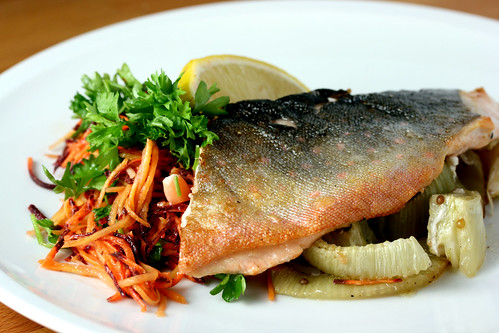
Arctic Char with Roasted Fennel and Grated Tricolour Carrots

When Cowie was last over in Sweden we had a cracking dinner at a small restaurant and bar called Stearin, in Gothenburg’s trendy Linne district. My beef was delicious, but it was Cowie’s fillet of crispy skinned and soft fleshed röding that really caught our attention. We couldn’t work out what the mystery fish was. We left the restaurant convinced we had eaten trout but then found out via the magic of the interweb that röding is actually arctic char.

Fish Church 2

So when I saw a fillet of röding in the Feskekôrka I snapped it up and made it my mission to recreate the dish. I decided to make good use of an abundance of mulitcoloured carrots which seemed to be behaving like a chameleon as they changed colour to match the pink and purple speckled fish skin. And a stray fennel bulb seemed like a good idea too. As did an orange and a lemon.

Ingredients:

Fillet of Arctic Char
Half a fennel bulb
3 grated carrots
1 orange
1 lemon
1 tablespoon of honey
2 teaspoons of Dijon mustard
Some chopped parsley
Glug of olive oil
Half a red chilli
Salt and pepper

Method:

Roast the fennel in a hot oven with a wedge or two of orange for 30 minutes, or until soft and slightly coloured.

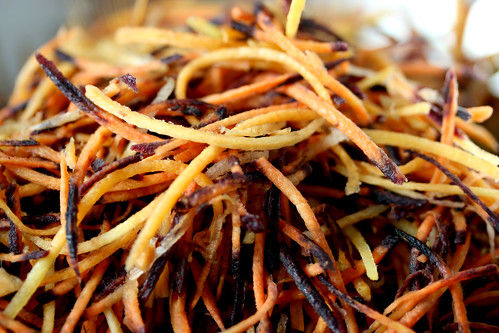
Grate your carrots. I used my MagiMix which took a mere 4 seconds and made me feel like a WI superhero! Dress the carrots with a mixture of olive oil, honey, lemon juice, Dijon mustard, orange zest and finely sliced red chilli. As well as some salt and pepper.

Grated carrots

Season the fish and sear skin side down until the skin is crisp. Then turn over and barely cook. You want the fish to be mooing.

Arrange the plate with the fennel as the foundation and balance the fish on top with the carrots looking like an upturned birds nest on the edge of the plate.

Artic char with grated carrots

It’s a delicious, light summer dish that would work just as well with salmon or trout. The carrots, with their citrus, honey and chilli notes and the sweet, aromatic fennel more than played their part too.

Further reading:

More information about Arctic Char on Chow
Swedish recipe for röding and an interesting Scandinavian food blog

Thursday, 19 August 2010

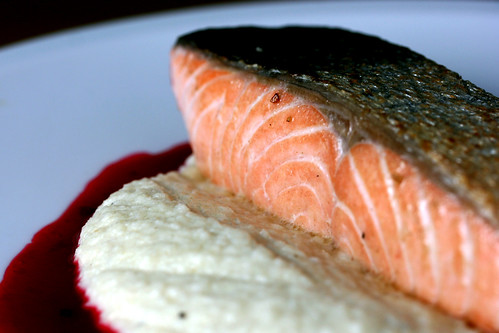
Seared Salmon with Cauliflower Puree and Redcurrant Sauce

Currants

I came home from the market with a bag full of treats and a brain that was racing with ideas about what to do with all my lovingly purchased ingredients. Bargainous oxtail and short ribs went straight into the freezer taking with them a meaty portion of my “what to cook” conundrum. I stood looking at my haul playing a mental game of word association, but with food. Then, with a shard of crimson inspiration, things clicked into place.

Redcurrants close

Super fresh redcurrants glowed like rubies, begging to be matched with a fillet of salmon that was so fresh I imagine there’s a fish swimming around with an oblong hole in its side. And with an absence of potatoes, a cauliflower raised a hand and volunteered to fill in. Seared salmon with cauliflower mash and redcurrant sauce may sound like something Alan Partridge may pitch as the name of his new TV show, but I can assure you it is delicious.

Ingredients to serve one (sob sob):

1 salmon fillet with the skin very much still on
Handful of redcurrants
5 cardamom pods
1 onion
2 cloves of garlic
Half a head of cauliflower
250ml of milk
2 table spoons of crème fraiche
1 tablespoon of grated horseradish
1 tablespoon of honey
Salt and pepper

Method:

Start by making your cauliflower mash. Saute the onion and garlic gently until soft. Don’t let them colour. Cut the cauliflower into small pieces and simmer in the milk. Be careful not to burn the milk. When soft blitz in a blender and then add the crème fraiche. The consistency should be smooth and soft. Season with alacrity and add the grated horseradish if you fancy a bit of warmth.

Add the redcurrants and cardamom to a pan and just cover with water. Boil until the currants of soft and the liquid is red. Pass through a sieve and return to the pan. Add the honey and reduce until it is syrupy. (If you carry on reducing it and then let it cool it will become jelly).

Then season your salmon and sear skin side down to crisp up the skin. Turn it over and barely cook until it is rare. Spoon the cauliflower puree onto a plate and place the salmon on top. Dress with redcurrant sauce and serve.

Salmon with cauliflower puree and redcurrant sauce

I was rather pleased with how it turned out. The earthy flavour of cauliflower was a good foil for the salmon whilst the sweet, sour and aromatic redcurrant sauce added a powerful counterpoint. The blood coloured moat made it look like it had been cooked by Dexter. My favourite part of the dish was the way that everything was so soft except for the lusciously crispy salmon skin which snapped, cracked and crunched in equal measure.

Further reading:

Redcurrant sauce
Cauliflower puree
Dexter

Monday, 16 August 2010

Tricolour Carrot Tagliatelle with Orange Zest, Coriander Seeds and Scallops

Carrots

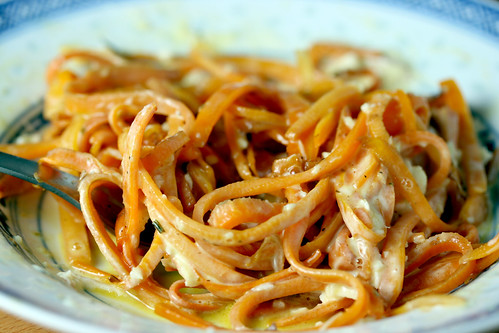
This started out as a healthy experiment that worked well in principle but wasn’t quite right taste wise and evolved into a dish I’m really proud of. Inspired by the success of making salsify tagliatelle I thought it would be fun to do something similar with carrots. But whereas the creamy seafood sauce worked wonders with the salsify thanks to the white root vegetable’s oystery taste, my horseradish carbonara was best consigned to the compost bin.

Carrot tagliatelle 3

Carrot tagliatelle

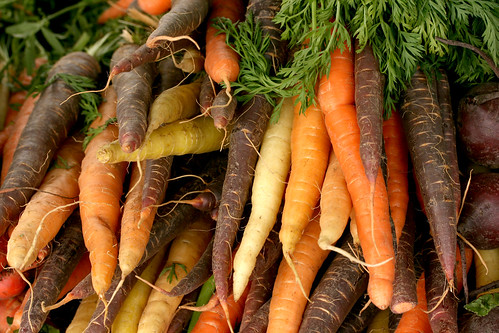
But rather than give up I mulled things over, invested in some multi-coloured carrots and had a look in my Flavour Thesaurus. Prior to peeking inside, I had wondered whether orange and a Middle Eastern spice might work well and was delighted when I stumbled across the fact that Niki Segnit recommends both orange and coriander seeds as two great flavour combinations to throw at carrots. So I thought, what the hell, let’s try both. And then threw some scallops in as well to turn it into a proper meal.

Heritage carrots

Ingredients:

A bunch of peeled, long, multi-coloured carrots
Coriander seeds
2 oranges
4 scallops
Red chilli
Salt
Pepper

Method:

Using a vegetable peeler, cheese slicer or mandolin, shave your carrots into thin strips. Then cut all these carrot strips into tagliatelle width slithers. You’ll be left with a bowl of raw carrot tagliatelle.

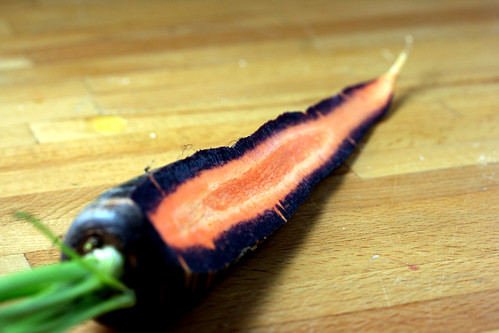
Multicoloured carrot

Squeeze the two oranges into a pan and reduce the juice with a tea spoon of honey and some crushed coriander seeds. Add the zest of half an orange and check to see it all taste vibrant. I added a touch of chopped red chilli as well for good measure, but you needn’t if you don’t fancy it.

Then boil the carrots briefly in salted water. And sear your scallops having seasoned them first.

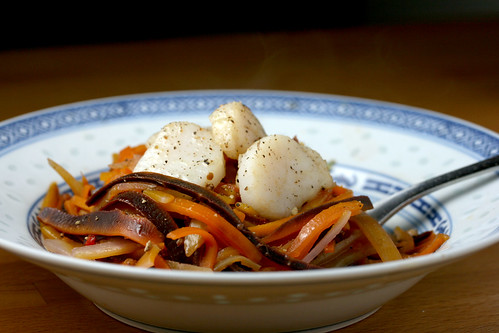
Add the carrots to the sauce and combine. Serve in a bowl. Season. And then add the scallops on top. Then gasp at how beautiful, healthy and delicious this is. It may not be a traditional bowl of pasta. But it’s certainly strikingly different.

Tricolour carrot tagliatelle with scallops

If you've got any thoughts about flavours and sauces that could accompany carrot tagliatelle please let me know...

Further reading (beware it's all a bit health foody):


Griddled salmon with carrot spaghetti

Carrot spaghetti with green pesto
Carrot tagliatelle with almond garlic and brocoli

LinkWithin

Blog Widget by LinkWithin