Showing posts with label The Nordic Diet. Show all posts

Sunday, 1 May 2011

Smoked Mackerel and Beetroot Speltotto

Smoked Mackerel and Beetroot Speltotto

As regular readers know I am partial to a risotto. But with my loose adoption of the Nordic Diet, which spurns simple carbohydrates, I’ve not been able to enjoy them as freely as I’d like to. Trina Hahnemann instead suggests using whole grain risotto rice, but I’ve struggled to find it in Sweden – and even struggled to lay my hands on any on a recent trip to Florence. So instead, like a heroin addict trying to find a cure, I found solace, not in cough medicine, but in spelt. Sure, it doesn’t give you quite the same smack as a true risotto, but it packs twice as much protein and less sugars, so is better for you, without being too worthy.

In Sweden spelt is called dinkel, which is a name I rather like. Partly because it reminds me of Claudia Winkleman, but also because it just sounds so innocent. I bought a packet of dinkel grains from a brand called Saltå which I can’t recommend highly enough. Now, when I look on my shelves, I see a line of beautifully designed packages, replete with an iconic, lino cut image of an old fashioned mill, stamped onto reassuringly thick brown paper. I’ve got their whole grain spaghetti, their spelt flour, their red rice, their quinoa, their amazing porridge oats and now their spelt. Many of their products are bio-dynamic, most are organic, all are superbly made and none have ever let me down. They’ve managed to make the terribly dull world of goody two-shoes carbs, just a little bit sexy.

Not knowing quite what to do with my spelt I consulted Twitter and was sent in the direction of the Sharpham Park website which suggested using pearled spelt as a risotto rice substitute. I’ve shamelessly stolen the term “speltotto” from the chaps at Sharpham, although maybe Dinkelotto would be more fitting. As ever, my beetroot fetish continues unabated and it always goes well with smoked mackerel, a splodge of goat’s curd and a sprinkling of chives. Previous experience of making beetroot risottos has meant that I’ve given their recipe a sharp tweak to get the maximum beet-impact.

Ingredients

100g Dinkel / Spelt per person
1 smoked mackerel
1 finely chopped shallot
1 glass of white wine
Goat’s curd or goat’s cheese
4 beetroot
Chives
1 litre of stock
Olive oil
Butter
Salt
Pepper

Method

Peel the beetroot and dice them very finely. Then add them to a pan, cover with the stock and simmer until the beetroot is tender. Reserve the liquid, for this will be your ruby red stock. Sharpham Park suggest grating, but if you do this, I think you miss out on texture and colour.

Fry the shallot until tender. Add the spelt as you would do with risotto rice. Then after it has crackled for a minute add the wine. Let it huff and puff like a thirsty dragon and then add the crimson beetroot stock and reserve the beetroot solids. Continue until the spelt has absorbed the liquid and has softened which could take anywhere from 20 minutes to 50! (You can reduce the cooking time by soaking the spelt overnight). Add the beetroot pieces towards the end.

Then when the spelt is cooked beat in some butter and season with gusto. Integrate the smoked mackerel and goat’s cheese. And finally, sprinkle over some chopped chives.

Smoked Mackerel and Beetroot Speltotto

It’s an earthy, toothsome, beast, so works well with something piercing to offset the deep flavours – a decent glass or two of dry German Riesling would hit the spot. My final piece of advice, aside from not wearing white, is to make a big batch and enjoy it for lunch the next day and also as alarmingly coloured arancini.

Tuesday, 8 March 2011

De-vine Kåldolmar

Since moving to Gothenburg I’ve tried to learn about Swedish culture and language through the medium of food. It seems to be the best way to uncover the truths about what makes this country tick. The more you read and eat the more you encounter the paradoxes and culinary riddles that slice through Swedish culture. My latest lesson involves 18th century battles, a town named Bender, a king called Karl and the Swedification of the classic Turkish dish of stuffed vine leaves into cabbagey kåldolmar.

The story of kåldolmar dates back to the early 1700s and offers a glimpse of Sweden’s once mighty past and tetchy relationship with its bellicose northern European neighbours. Apparently, King Karl XII, after losing the decisive Battle of Poltava in 1709 to Russia and their Polish and Norwegian allies, went into exile in a Turkish town called Bender. Whilst he was there, living off the generosity of his Ottoman allies, he spied on their warships and returned home to Sweden several years later with blueprints for a rejuvenated navy and more importantly a taste for dolmas.


Battle of Poltava (1709) painted by Denis Martens the Younger in 1726

The linguists amongst you will know that “dolma” means “stuffed thing” in Turkish which highlights the versatility of this dish. You’ll find different varieties of dolma across the old Ottoman Empire with fillings ranging from ground meat, to aubergine, courgette, peppers and rice, but typically the shell is a vine leaf. It’s hard to know which particularly style of dolma was Karl’s favourite, but from my experience of Swedes I’d guess that it was at the meatier end of the spectrum.

Saffron Dolmas & Tahini

Dolmas from Norwichnuts on Flickr

In the chillier climes of Sweden, vine leaves were hard to come by, but Karl and his followers still hankered after the exotic taste of dolmas. So being the creative and practical nation that they are, the Swedes adapted the dish to use cabbage instead of vine leaves as a sturdy casing for the minced pork. They also switched carbs away from the rice you’ll find inside dolmas and now serve these meaty parcels with boiled potatoes, gravy and lingonberry jelly. For a decent recipe for classic Swedish Kåldolmar look no further than Annes Food.

One of my frustrations since moving across the North Sea is that the trend for smuggling enchanting tastes back from the Middle East, started by King Karl, doesn’t seem to have continued, despite the large and vibrant Middle Eastern population in Sweden. Fine, you can get donner kebab on your pizza, and plenty of curious spies in your meatballs, but so far, I haven’t found anywhere that expertly grills spiced meat over charcoals like Antepliler in Manor Park or any of the middle eastern delights you’ll find on the Edgware Road or Yottam Ottolenghi’s delis and books. Where’s the Turkish, Iranian and Iraqi version of Tayyabs in Gothenburg?

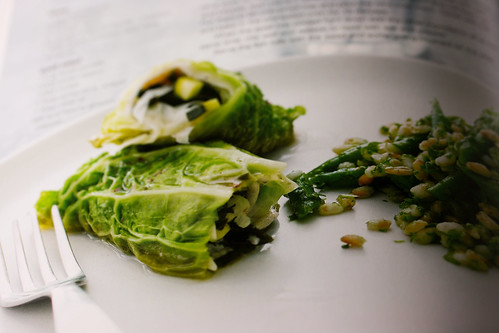
One of the most interesting recipes in the Nordic Diet cookbook sees the classic, meaty, kåldolmar given a healthy, fishy update. Trina Hahnneman kicks out the pork and replaces it with plaice, mustard, leeks and courgettes.

I gave them a twist of my own and have found the process of wrapping fish in blanched cabbage to be a very therapeutic process. The technique is pretty simple and is the basis for a wide range of healthy and delicious variations.

Nordic Diet-7

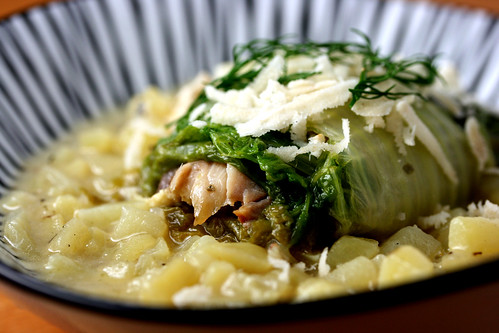
Smoked Mackerel Kåldolmar with Pototto (Potato Risotto)

Inspired by Marcus Sameulsson's excellent Aquavit cookbook and Trina Hahnemann's Nordic Diet

Serves 2

4 cabbage leaves
4 smoked mackerel fillets
Dijon mustard
400 grams of waxy potatoes – diced into 8mm cubes
Vegetable stock
Horseradish
Dill
1 onion
Olive oil
Butter
2 glasses of white wine
Salt and pepper

Blanch four cabbage leaves in salted water and refresh in running cold water. Allow to cool and then remove the tough stem which acts as a structural spine. This will make the leaves more foldable.

Place a mackerel fillet in the centre of each leaf and smear with a dollop of mustard and anoint with lemon zest and ground black pepper. Then wrap them up like you would with a burrito. For guidance take a look at Cheryl Marie’s blog.

Finely dice the onion and sweat in olive oil. Then add in the 8mm cubes of potato. Add a glass of white wine and then ladle in stock and stir, as you would do with a risotto. It won’t take very long to cook so keep an eye on it. Add some thyme or tarragon as you go depending on what’s to hand and what you feel like. Beat in some butter at the end and keep warm.

Place the cabbage parcels in a baking dish and pour in a glass of white wine. Cook for 10 minutes. And then serve on top of a bed of posotto with plenty of seasoning, a sprinkling of grated horseradish and a scattering of dill.

Mackerel cabbage parcel

Fish parcel wrapped in cabbage from Trina Hahnneman’s Nordic Diet

Serves 2

4 cabbage leaves
400g of white fish fillets
1 courgette
1 leek
1 red pepper
Olive oil
Lemon zest
Salt and pepper
1 glass of white wine

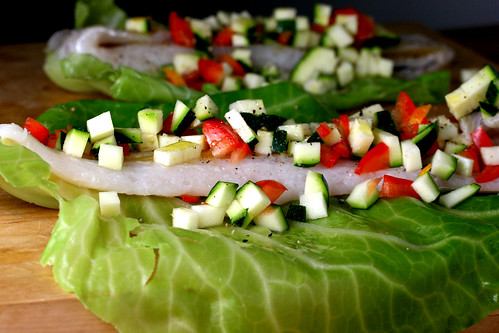
Blanch and refresh the cabbage leaves in the same manner as the first recipe. Place a 100g piece of fish in each parcel and then add a spoonful of diced courgette, red pepper and leek. Then add a dab of butter, a dusting of lemon zest and plenty of seasoning. Then wrap them up and place them in a baking dish with a glug of olive oil and a glass of white wine.

Hake wrapped in cabbage

Bake for 12 minutes until the fish is just done and serve. I partnered it with fregola, roast peppers and tomatoes which gave a sweet, red counterpoint to the savoury greens.

Hake wrapped in cabbage 2

It works just as well with minced fish and langoustine tails. When I next have a load of langoustine or crayfish, I’ll formalise it into a recipe. Roll on "Kåldolmens dag" which celebrates the Cabbage Roll on 30 November.

Sunday, 23 January 2011

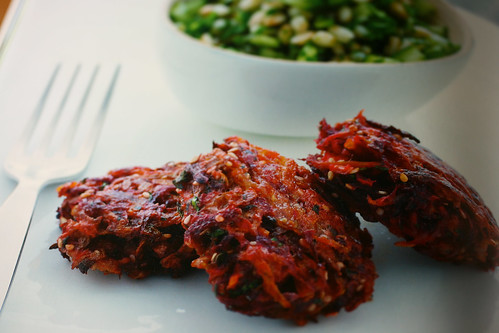
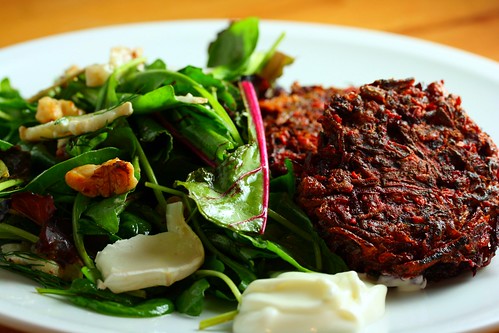
Nordic Beetroot Burgers with Goats’ Cheese and Walnut Salad

Nordic Diet-9

I’ve developed a bit of a beetroot fetish since moving to Sweden. I find it’s always on my shopping list and seems to leave its scarlet mark on almost every dish I cook. I love the muddy flavour and mellow sweetness and would be very sad if there was ever a world shortage of beetroot. One of the reasons I like it so much now is that I used to hate it when I was younger. I’ve got bitter-sweet memories of hating the overly pickled taste of my grandmother’s beetroot but loved the fact that it came, covered in sandy soil, from their kitchen garden. Now, whenever I eat beetroot I remember my grandparents and their staggering vegetable patch and hanker after having one of my own one day.

Veggie burgers have a very bad press. They normally fall apart and taste more of old oil than of anything pleasant. It strikes me as a shame to mush up lots of lovely vegetables and then muddy the fresh flavours in search of the juicy glory of a really meaty burger. But the beauty of beetroot burgers is that they are singularly focused on one vegetable that responds very well to being “burgered up”. I guess it’s a combination of their vivid flavour and colour, but also the fact that beetroot’s starches caramelise nicely when seared, much like meat does.

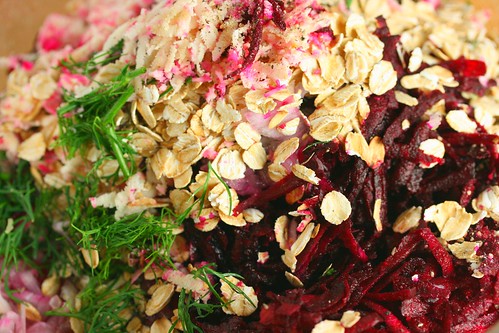
This recipe for the burgers is from Trina Hahnemann, but without any ghastly rapeseed oil and rather than a barley salad is paired with a goats’ cheese and walnut salad instead. My only question is what are the mystery seeds in the photo from the book at the top of this post because they don’t appear in the recipe?

Ingredients:

For the beetroot burgers:

500g red beetroot, grated
100ml porridge oats
3 eggs
1 shallot, very finely chopped
4 tbsp finely chopped dill
2 tbsp finely chopped thyme
2 tbsp finely chopped parsley
Salt and freshly ground pepper
1 tbsp vegetable oil, for frying
Crème fraiche and dill dollop

For the salad:

Mixed leaf salad including beetroot tops
Goats’ cheese
Toasted walnuts
Honey, mustard, olive oil and balsamic vinegar to dress

Method:

Peel the beetroot and then finely grate. If you have a Magimix I’d suggest you use it as it saves a lot of time.

Mix the grated beetroot with the eggs, porridge oats, herbs, seasoning and shallots. Get your hands dirty and work it all together. Then chill in the fridge for an hour or so. This is important as it allows the mixture to mingle and means that the burgers have more structural integrity.

Grated beetroot

Form the burgers into patties and fry until they are crisp on the outside and then finish in the oven for 20 minutes.

Frying burger

Assemble the salad, and whisk up the dressing whilst the burgers are cooking through and serve with a dollop of dill crème fraiche.

Beetroot burgers with salad

I’ve got a feeling they would also work well as “beet-balls” but I’m not sure yet what sauce to slosh on top of them. If you’ve got any ideas, let me know.

Delicious. Healthy. And different. Well done, again, to The Nordic Diet.

This post is part of little series dedicated to The Nordic Diet cookbook which was sent to me by Quadrille.

Sunday, 9 January 2011

Chicken with Baked Rhubarb and Cucumber and Radish Salad

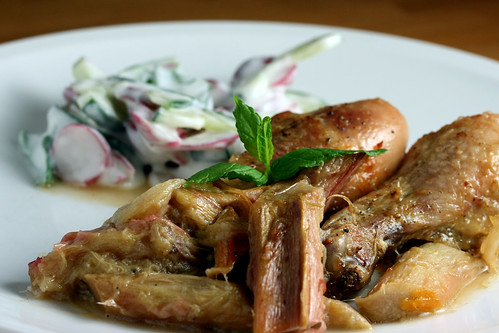
Chicken with rhubarb

I love the way rhubarb unfurls out of the spring soil to display a Mateus flushed shard of swollen stem and tough, poisonous leaves. I love the ritual of forcing rhubarb in darkened conditions to beat your neighbours to serving the first rhubarb of the season. I think back longingly of my grandmother’s hit or miss rhubarb fool that was always delicious, if a little stringy. And will almost always order a rhubarb dessert if I see it on the menu. Unfortunately, we don’t eat much rhubarb as a family because the acid gives us all joint ache. But it’s worth the discomfort.

Up until now I’d not thought too much about rhubarb (shocking I know). But the more I read, the more interesting it becomes. For starters who knew that rhubarb is actually a vegetable and is in the Rheum family and is therefore closely related to sorrel? Or that in America it is legally a fruit because a judge said so in 1947? Or that it originated in Asia and has only been cultivated in the western world for the last two or three hundred years? Or that the roots can be dried and used as a tonic to cure constipation and circulatory issues? Or, more importantly, that this enigmatic stem is amazing with chicken?

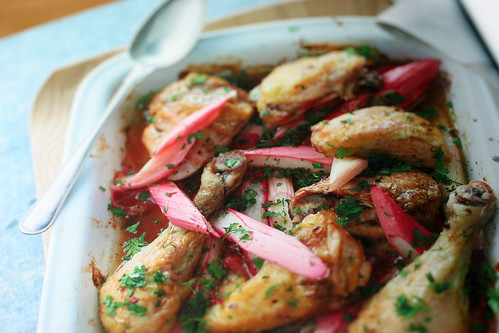
Trina Hahnemann’s recipe for “chicken with baked rhubarb and cucumber -radish salad” immediately stood out from her Nordic Diet cookbook, partly because of the stunning photograph but more significantly because of its weirdness.

Nordic Diet-4

But when you think about it, the idea makes a lot of sense. Chicken is great with lemon and other acid driven accompaniments, so long as it is balanced by something sweet to take the tartness away.

Ingredients

Chicken legs
2 stalks of rhubarb
A few spoons of honey (she uses raw sugar – but I prefer honey)
Salt
Pepper
1 Cucumber
10 Radishes
Yoghurt (preferably goats’)
1 clove of garlic
Chopped mint

Method

Season the chicken legs and roast for 30 minutes. Meanwhile chop the rhubarb into 2 inch long batons and lightly coat in honey. After 30 minutes add the rhubarb and cook for a further 15 minutes.

To make the salad finely slice the radishes and de-seed, then finely slice the cucumber. Mix with just enough yoghurt, a finely minced clove of garlic and the chopped mint. Season.

Serve the chicken with the salad and garnish with a sprig of mint. It’s a great way to use up a glut of rhubarb in late spring or as a way of causing a bit of Steingarten-esque debate about the differences between fruit and vegetables. I think it is a fantastic idea and am looking forward to experimenting further. I wonder what a rhubarb-ified version of honey lemon chicken would be like?

Further reading

Other rhubarb chicken recipes on Rhubarb Compendium including roast chicken stuffed with rhubarb and the psychopathically named chicken smothered in rhubarb

Rhubarb as an accompaniment to fish in the Independent

Mackerel with roasted rhubarb from Nigel Slater


Savoury recipes for rhubarb on Chowhound


Jeffrey Steingarten’s Man Who Ate Everything (including a spellbinding chapter called Ripeness is All about the differences between fruit and vegetables)

Trina Hahnemann’s – The Nordic Diet on Amazon


The science of rhubarb poisoning


This post is part of little series dedicated to The Nordic Diet cookbook which was sent to me by Quadrille.

Tuesday, 4 January 2011

Super Healthy Fish Cakes

Fish Cakes-4

If meatballs are the indulgent Yin then fish cakes must be the healthy Yang in Scandinavian culture. In Sweden, fish cakes are called “fiskbulle”, which literally translates as “fish patty”, which is a rather unpleasant sounding expression that doesn’t do them justice. They are so ubiquitous that you can buy them in tins and there are as many fish cake recipes over here as there are for sausages back in Blighty.

In my experience fish cakes are normally heavy on the stodgy potato and light on the fish which yields one of the most bland mouthfuls you will ever come across. They’re a great way of padding out a pub menu and making a few quid out of some iffy leftovers. But these prejudices were shattered when I tried Trina Hahnemann’s recipe for fish cakes in The Nordic Diet cookbook.

Nordic Diet-8

She switches mashed potato for porridge oats, grated courgette and carrot which lightens the texture and adds colour and moisture. I took the recipe a bit further by trying Niamh’s trick or coating the patties in breadcrumbs which created a crisp coating if you are feeling a bit more indulgent. And I can’t stand rapeseed oil so used sunflower oil instead. The book suggests pairing the fish cakes with potatoes and asparagus which would have been great but all I had was some barley and kale which was a shame.

Ingredients – makes 6 fishcakes

500g of minced fish – a mixture of salmon and white fish such as pollack, coley or ling
1 tsp salt
2 tbsp porridge oats
2 egg whites
2 finely grated carrots
1 grated courgette
Pinch of thyme
Sunflower oil for frying
Knob of butter
Japanese panko breadcrumbs
Pepper

Method

Choose your fish judiciously and have it minced. You don’t want anything too classy or endangered like cod or haddock. But try to include some salmon as much for colour as flavour. In Sweden they are very happy to mince your chosen fish in front of you in the fishmongers and very often have it pre-minced in pre-weighed bags. But in the UK you may want to finely mince the fish with a sharp knife or give it a very brief pulse in a food processor.

Add a generous pinch of salt and a grind of pepper. Then add the egg whites, porridge oats and grated veg and mix thoroughly. It should all come together and not fall apart. If it’s too dry add egg white. If it’s too wet add oats. Leave it to chill in the fridge for an hour or so.

When you are ready for dinner remove the mixture from the fridge and form into patties. If you are feeling indulgent pour breadcrumbs on a chopping board and press the patties into them so they stick. Then fry until golden.

Fish Cakes-2

Fish Cakes-10

Fish Cakes-9

The fish cakes were moist, lightly textured and full of fishy flavour. Not cloying at all and far lighter than their cousins from across the North Sea. The substitution of potato for carrot and courgette makes them far better for you as well according to the principles of The Nordic Diet. I had them with a minty yoghurt sauce and nutritious but very dull barley and kale splodge which is all I had in the fridge.

The yoghurt was a good match but the greens and grain were anything but. A fennel and caper salad would have been a much better platefellow. You could also experiment with adding ginger, chilli and lemongrass to the mix to give them an oriental aspect and pair them with some steamed Chinese cabbage and stir fried vegetables. But whatever you do, don’t think you can substitute fresh fish for tinned mussels and smoked mackerel, courgettes for Swede or consider using rapeseed oil because I’ve tried it and it tastes pretty gross!

Fish cakes

This post is part of little series dedicated to The Nordic Diet cookbook which was sent to me by Quadrille.

Monday, 29 November 2010

Embracing The Nordic Diet

Nordic Diet-1

One of the things that strikes you when walking around Gothenburg isn’t the stunning beauty of the city, or the overwhelming sight of gorgeous Swedes. It took me a while to work it out. It was an absence rather than a presence. And then I realised as I bumped into a fat person. Fatties are rare in Sweden. So much so that you land up staring at them and joking about whether they are Americans! Sure you see some big people. But they tend to be big boned Vikings rather than lardy layabouts.

A confluence of events spurred me into changing my diet to be more Scandinavian – my shirts were uncomfortable, I found myself wearing jumpers the whole time and I saw a sickening photograph of myself on a beach. And then, as if the fat Gods were watching, a nice person from Quadrille sent me a copy of The Nordic Diet. Initially I was sceptical and scoffed at the idea of a book with the word “diet” in the title. But then I did some background reading and cooked a couple of recipes… and now I am scoffing at myself for scoffing in the first place.

The Nordic Diet, by Trina Hahnemann, is inspired by the fact that the Nordic countries have very low levels of obesity. It stands to reason, therefore, that the dietary patterns of this part of the world might play a role. As you can imagine there’s plenty of debate because it is so hard to prove, but it is being championed by Arne Astruo from the University of Copenhagen who have put £12million behind it. Nutritionists are touting it as a more suitable alternative for Brits than the rather expensive and tricky Mediterranean diet which calls for lashings of olive oil, tomatoes and fresh fish. The Daily Mail says, “Nutritionists even predict the Viking diet could be to the 21st century what the Mediterranean diet was to the 20th.”

The Nordic Diet echoes the Mediterranean Diet’s slow approach to eating but takes things a few steps further by suggesting that we cut down our meat intake and instead eat more lean game, berries, brassicas, fish, vegetables and ancient grains that release their energy stores more slowly and provide more fibre.

Given that meat is expensive in Sweden and that the fish is so fresh, I’ve found myself naturally synching with this Nordic approach to eating. It’s left me feeling healthier, a stone or two lighter, less impoverished and far more appreciative of good meat when I eat it. It’s also led to me discovering new dishes and has encouraged me to experiment more with vegetables and grains like beetroot, kale and spelt. The only weird thing about it is that none of my Swedish friends have ever heard of it!

Nordic Diet-3

Trina Hahnemann’s book is an inspirational foundation for living a healthier, more balanced life. The opening section explains the nuts and bolts of the “diet” which is as much about lifestyle as it about hardcore nutrition. The book then continues to offer ideas for salads, soups, fishy and meaty main courses as well as puddings and solid advice about Scandinavian baking. I’ve tried many of the ideas in the book such as delicious beetroot burgers, roast chicken with rhubarb, fabulous fish cakes and fish wrapped in cabbage leaves and will be sharing these dishes with your shortly.

Nordic Diet-4

Nordic Diet-7

Nordic Diet-8

Nordic Diet-9

My only criticisms are that there aren’t enough recipes and that every now and again they aren’t quite as exciting as they could be. But that’s the flip side of a diet book I guess. But I can’t criticise the amount of flavour the recipes deliver given the simple ingredients they involve. So as well as sharing my experiences with Trina’s recipes I am also going to give a few ideas of my own that are based on the principles of The Nordic Diet but with a few twists. In the meantime, if you are feeling a bit podgy and are keen for a culinary adventure rather than lots of cut backs, then join me in embracing The Nordic Diet.

Thanks to Quadrille for the book and for helping me fit into my old wardrobe. And I hope these photos of the book's wonderful photos aren't some horrific breach of copyright!

Further reading:

Collection of Nordic Diet links on my Delicious feed
Trina Hahnemann's Scandinavian Kitchen on Amazon
Trina Hahnemann's The Nordic Diet on Amazon

LinkWithin

Blog Widget by LinkWithin